

SAM Web Studio · Graphic Design Services
Graphic Design Services for Brands and Marketing Teams
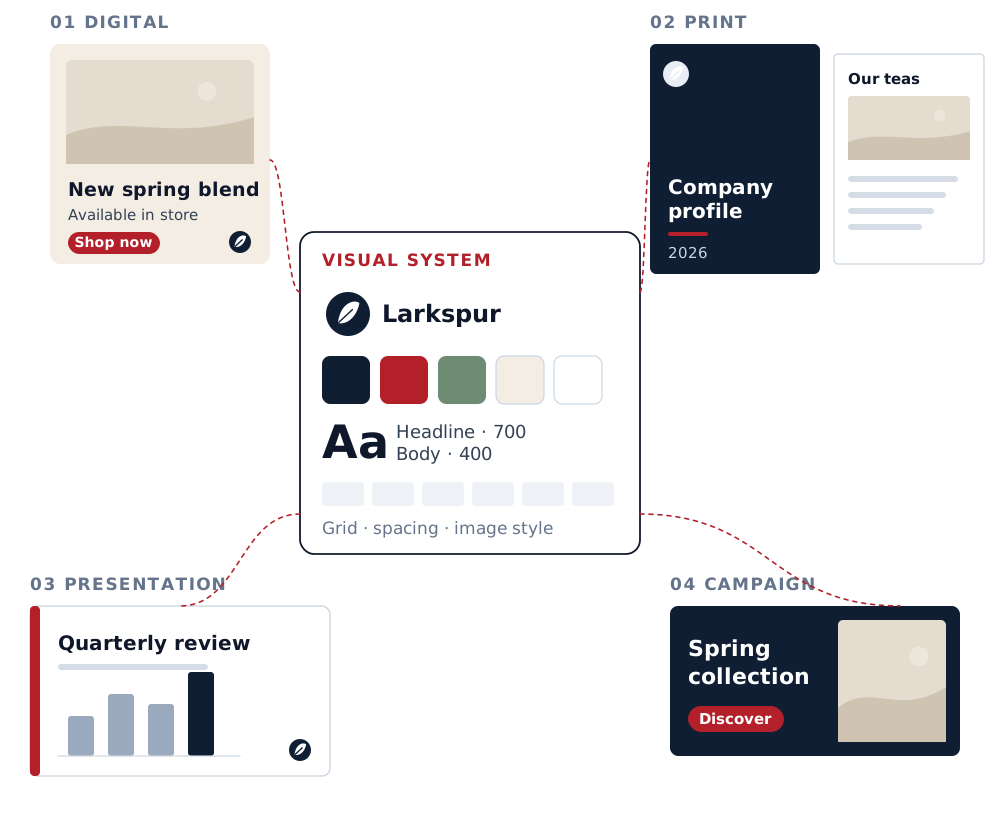
SAM Web Studio provides graphic design services that give a business one visual language across everything it publishes: social posts, ad creative, brochures, company profiles, presentations and print. Colour, type, imagery and layout follow the same rules, and files are prepared for how your team and printer will use them.
- Visual Identity
- Social & Ad Creative
- Brochures & Profiles
- Presentations
- Print Collateral
Rated by clients
4.3–5.0across 6 review platforms






What graphic design services include
Graphic design services turn a brand into the materials people actually see. They cover the visual rules a business uses — colour, typography, imagery and layout — and apply them to social and advertising creative, brochures, company profiles, presentations and everyday print, with templates for anything your team produces repeatedly.
What we design
- Visual identity rules, or documentation of an existing identity
- Logo work within a wider identity project
- Social media post and campaign sets
- Static display and social ad creative
- Brochures and company profiles
- Presentation and pitch-deck masters
- Visiting cards, letterheads, flyers and posters
- Reusable templates for recurring materials
Not every project needs a new identity, and not every client needs a new logo. Many start from an existing brand and need it applied consistently.
Design starts with the message
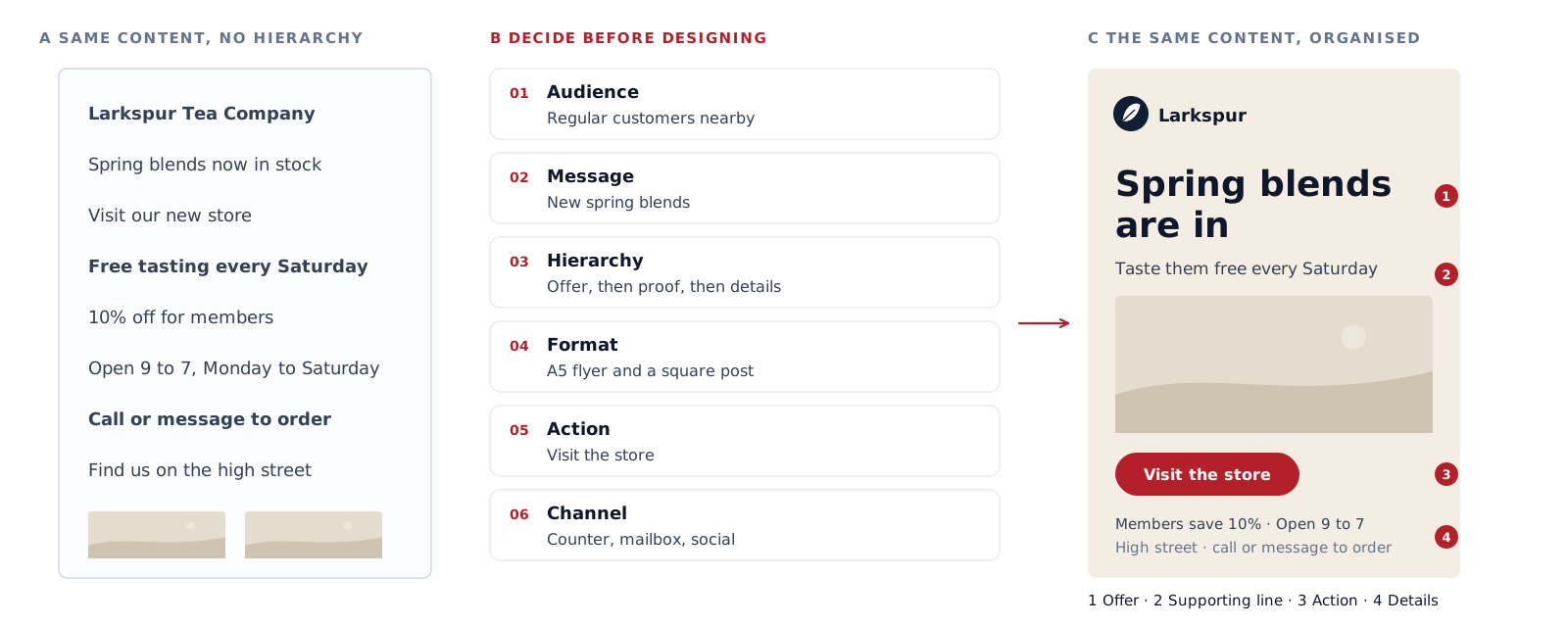
Before choosing layouts, colours or images, we settle what a piece has to do: who it is for, the one message it carries, what comes first, which format it takes, what the reader should do next, and where it will be seen.
Graphic design organises communication; it does not decorate unclear content. When the message and its order are agreed first, the layout follows from them, and the same content can move between a flyer, a post and a slide without losing its point.
Designing with real content
Brochures, decks and campaign sets are designed around your actual content, or a realistic outline of it. Headings run long, figures need tables, and some services need more space than others; designing with dummy text hides all of this until late in the project, so we ask for the real material, or its structure, early.
One visual system across every material
Materials look related when they share the same rules, not when they are identical.
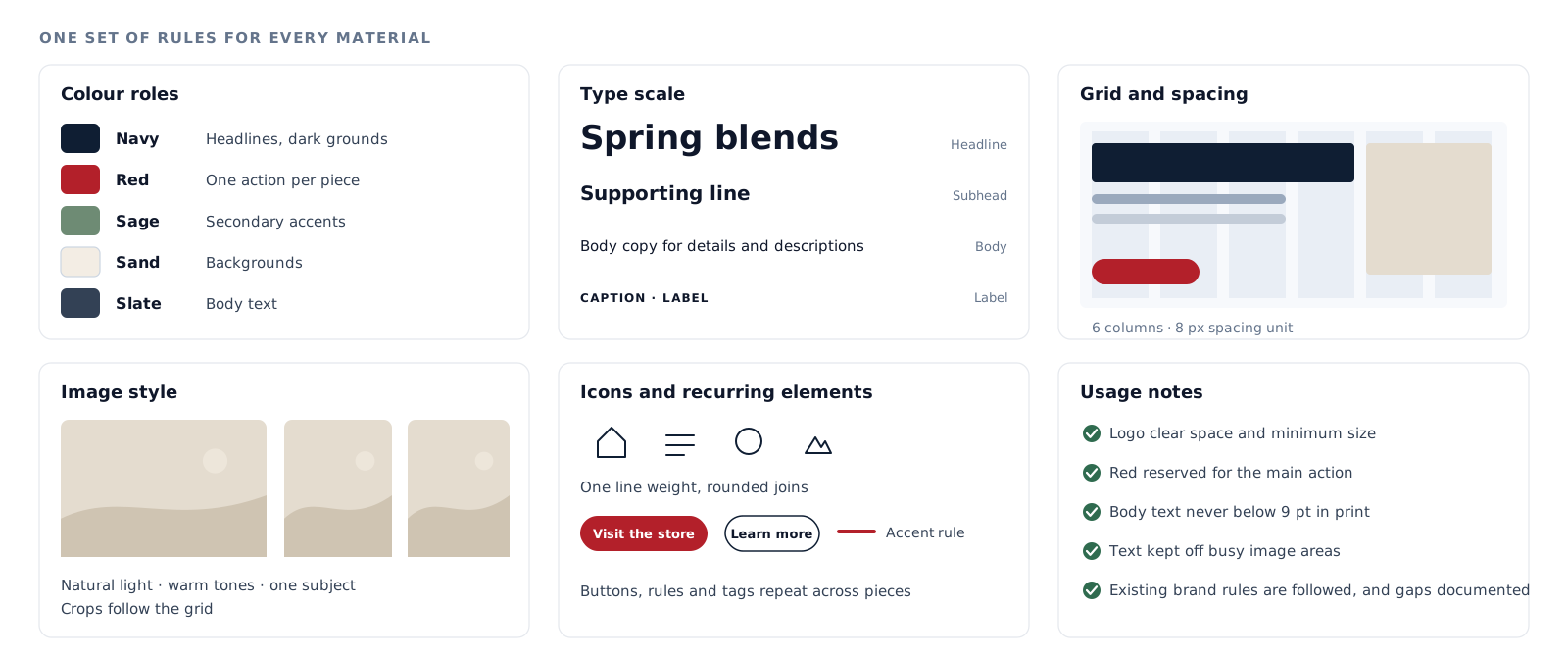
Before producing a set of assets, we define — or document, if it already exists — the visual system they will share: colours and how they are used, typefaces and their sizes, spacing and grids, image style, icons, recurring elements such as buttons and rules, and how hierarchy works. The rules are written down as short usage notes, so anyone producing materials later — your team, another agency or us — can follow them without guessing.
Brand identity and graphic design
A brand identity defines the building blocks: the logo or brand mark, colour palette, typography, image direction and the rules for using them. Graphic design applies those blocks to real materials. If your brand guidelines already exist, we design within them and document any gaps; we do not replace an identity that is working.
Logo work within a wider identity
Where a business needs a new or refreshed logo as part of an identity project, it is delivered with the versions a logo needs in practice: full and compact forms, light and dark backgrounds, and small sizes. Trademark availability can be checked by the client or a legal adviser where required.
Refresh or broader rebrand
A refresh is usually enough when the core identity still works but colour, type and application have become inconsistent; the job is to tidy and systemise. A broader rebrand may be justified when positioning, name, market or audience has changed. Our work here is the visual identity; brand strategy and positioning research are separate disciplines.
Brochures and company profiles
A brochure or company profile has to organise a lot of information so a reader can find what matters.
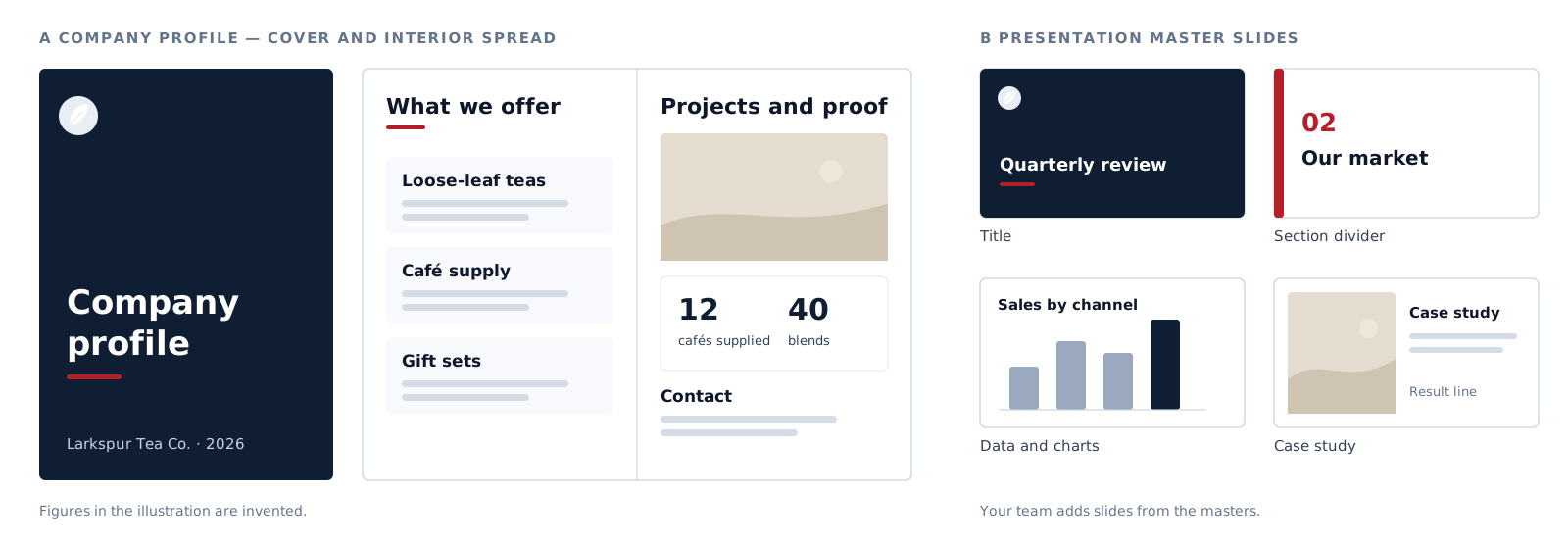
We design a cover and interior system that holds services or products in sensible groups, proof such as projects and figures, tables where they help, and contact details that are easy to find. The digital version is not just the print file exported: it is sized for reading on screen and kept to a file size that can be emailed or downloaded without trouble.
Presentations and pitch decks
A deck stays consistent when it is built from masters rather than slide by slide.
For sales and pitch decks we design a master slide system — title, section dividers, text, data and diagram slides, comparisons, case studies and closing slides — with consistent typography, so any member of your team can add slides that match. Charts and diagrams follow one style, so figures from different sources read as part of the same presentation. Good design makes the information clearer; the pitch itself remains yours.
Social and advertising creative
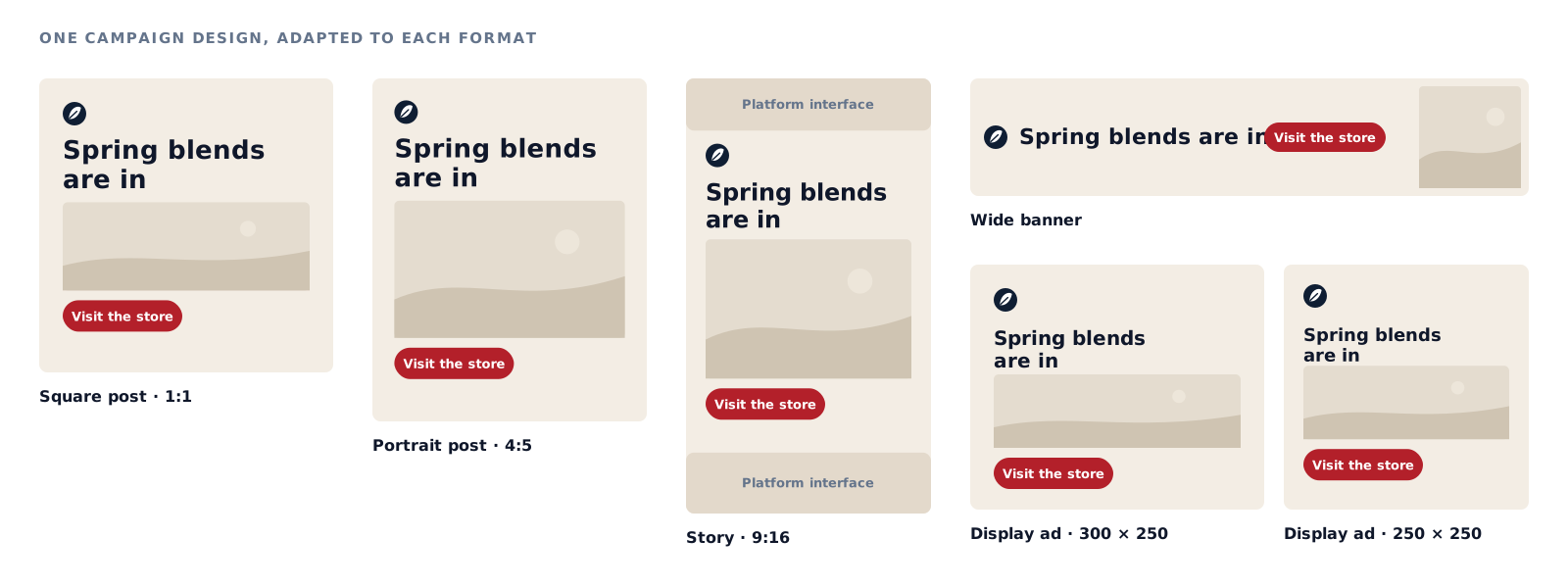
Digital creative is designed as a set, so one campaign idea works in every size it needs.
For social channels we design post systems rather than one-off images: announcements, promotions, campaign sets, carousels and story covers, with templates so new posts stay consistent. For ad campaigns we design static display and social ad creative with a clear message hierarchy and the size variants each platform requires.
- The message stays first in every size
- Logo and action keep their positions
- Text is kept clear of platform interface areas
- Type stays readable on a phone
We design the visuals. Content calendars, posting, community management, targeting and bidding belong to social media marketing and paid advertising, and design does not decide how a campaign performs.
Reusable templates
Much of the lasting value is in templates your team can reuse.
Social post templates, presentation masters, campaign asset templates and document layouts mean recurring materials start from something consistent instead of a blank page. The formats are agreed at the start, so the templates work in the tools your team actually uses.
Print and production-ready files
The same identity has to work on a phone screen, a printed page and a large display.
Visiting cards, letterheads, flyers and posters are designed from the same system as your digital assets and prepared as print-ready artwork to your printer’s specification:
- Final dimensions with bleed, trim and safe areas
- Colour set up for print and for screen
- Image resolution suited to each piece
- Type sizes and contrast that stay readable
- Export formats your printer and team need
We prepare the files; printing itself is done by the printer you choose.
How a graphic design project runs
Brief
What the materials are for, who sees them and where.
Existing assets
Logo, guidelines and past materials you already have.
Content and formats
The real content, sizes and specifications for each piece.
Visual direction
The system defined, or an existing one documented.
First applications
A few key pieces that test the system.
Review
Feedback rounds on real layouts.
Refinement
Changes agreed in review applied across the set.
Format adaptation
Remaining pieces and size variants.
Production checks
Print and export settings verified.
Final files
Exports, print-ready artwork and agreed source files.
Smaller projects cover fewer steps; not every project needs all of them.
What you receive
Depending on scope:
- Visual identity rules, or documented rules for an existing identity
- Logo files in their required versions, where logo work is included
- Designed assets for the agreed channels
- Size variants for each format
- Print-ready artwork where print is in scope
- Reusable templates
- Usage notes for colour, type and layout
- Editable source files where agreed in the scope
Files, fonts and licences
Files are named and organised by use — print, social, presentation, web — so your team can find the right version without asking for it again. Any third-party font, stock or licensed asset requirements are identified before final delivery, because licences for fonts, stock images and icon libraries depend on their source and do not always transfer automatically.
Graphic design or website and UI design?
They work together, but they produce different things.
Graphic design
Brand and marketing assets and the visual system behind them: identity rules, campaigns, social and ad creative, brochures, decks, print and templates.
Identity · collateral · creative · templates
Website design and UI/UX design
Interactive structures: website pages, navigation and responsive layouts, or application screens, flows and interface states.
Pages · navigation · interfaces · states
Graphic design supplies the logo, colours, graphics and imagery a website uses; where and how they appear on the site belongs to website design.
Related services
Design services
- Design overviewAll design services.
- Website DesignApplying the brand to your website.
- Website RedesignBringing an existing site in line with the brand.
Interfaces and stores
- UI/UX DesignFor applications and portals.
- Ecommerce Website DesignFor online stores.
Graphic Design FAQs
Visual identity rules where needed, or documentation of an existing identity, and the materials that apply them: social and ad creative, brochures, company profiles, presentations, visiting cards, letterheads, flyers, posters and reusable templates. The scope is agreed from your brief and existing materials.
Social media post and campaign sets, static display and social ad creative, brochures, company profiles, presentation and pitch-deck masters, visiting cards, letterheads, flyers and posters, plus templates for materials your team produces repeatedly.
Yes. If guidelines exist, we design within them; if they are incomplete, we document the missing rules as part of the work so future materials stay consistent.
Yes. Digital creative is designed as a set: one campaign idea is adapted to each size it needs, with the message first, the logo and action in consistent positions, and text kept clear of platform interface areas.
Yes, where both are in scope. Digital files are sized and exported for screens; print files are prepared to your printer’s specification, with bleed, colour settings and suitable resolution. Printing itself is done by the printer you choose.
Yes. Existing brochures, decks or templates can be redesigned within your current identity, or as part of a refresh when colour, type and application have become inconsistent while the core identity still works.
Usually your logo files, any brand guidelines, the content for each piece or a realistic outline of it, any photography you want used, and your printer’s specifications if print is involved. If some of these do not exist yet, we agree how to handle them in the brief.
Where agreed in the scope. We confirm the formats at the start so templates and files work in the tools your team uses, and we identify any third-party font or stock licences before final delivery.
Start a project
Do your materials look like they come from the same business?
Send us a few of your current materials and tell us what you need next. We will tell you whether your identity needs work first, what the system should cover, and which templates would save your team the most time.
We’ll review your materials and reply with the next steps.


