Interactive design agency

SAM Web Studio · Hire Laravel Developers

Hire Laravel Developers for Ongoing Application Work

Many businesses run on a Laravel application that keeps growing: new admin screens, another integration, a reporting module, a list of fixes that never quite gets shorter. If your team already owns the product but needs more Laravel capacity, we can propose a developer from our team to work in your codebase, from your backlog and to your conventions, engaged through SAM Web Studio.

Existing Applications · APIs · Integrations · Ongoing Feature Work

  • New Features & Modules
  • Admin Panels
  • REST APIs
  • Integrations
  • Database & Migrations

Discuss Your Laravel WorkSee What They Work On

When to add a Laravel developer

A dedicated Laravel developer suits teams with a steady flow of application work and someone in-house who sets priorities: a product owner, technical lead or founder. It works well when the backlog is growing faster than the team, when a key developer has left, or when a PHP specialist is needed alongside front-end or mobile developers who do not work in Laravel.

What they can work on

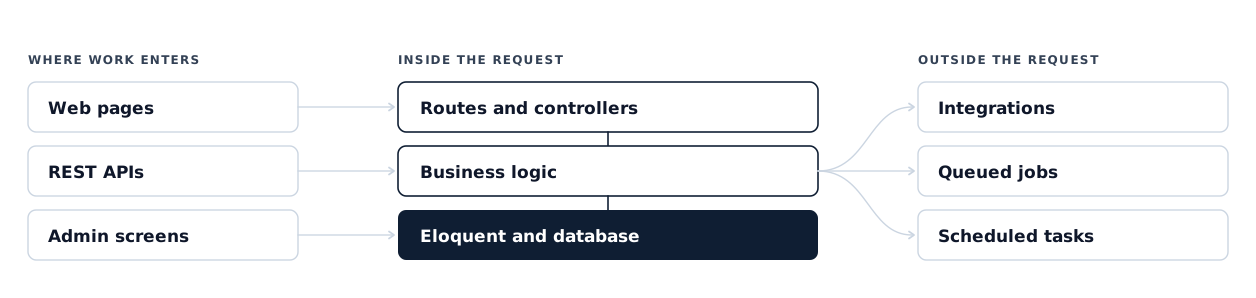
Typical work includes new features and modules, admin panels and internal tools, REST APIs for web or mobile front ends, integrations with CRMs, payment gateways and other third-party services, database changes and migrations, bug fixes, slow queries and code, scheduled and queued work where the application uses it, and automated tests where the project has them. Much of this is business logic on top of a relational database, which is the kind of application Laravel is commonly chosen for.

Common areas of Laravel work. Your application decides which of them apply. Scroll the diagram sideways to read it, or tap to open full size.Tap the diagram to open it full size, where you can pinch to zoom.

Joining an existing application

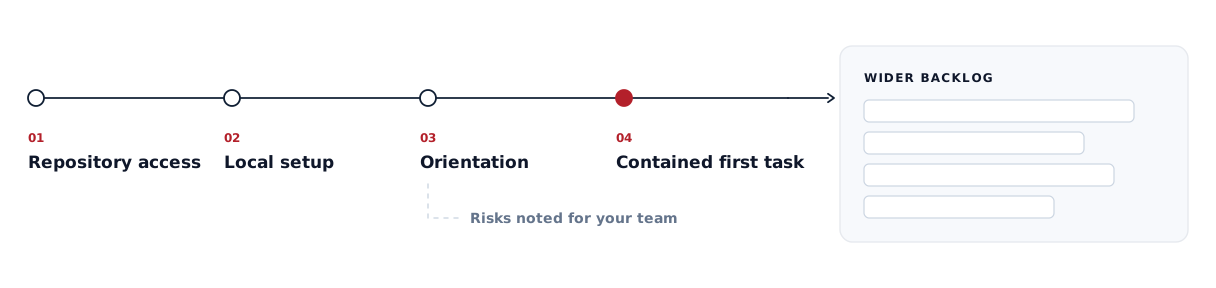
Much Laravel work is on applications someone else started. The first days usually involve repository access, getting a local copy running with the right environment configuration, and a walk through the main models, routes, packages and deployment steps. We recommend a first task that is useful but contained, such as a known bug, before moving on to features that touch many parts of the system. Along the way the developer notes risks worth your team's attention — outdated packages, missing validation, fragile integrations — so they can be prioritised rather than discovered later. How long this takes depends on the size and state of the codebase.

The order a developer usually joins an existing application in. Scroll the diagram sideways to read it, or tap to open full size.Tap the diagram to open it full size, where you can pinch to zoom.

New modules and features

New work starts from the requirement your team provides. Questions are raised early, and new code follows the codebase's existing patterns rather than introducing a different style for each feature. Decisions that affect the wider product — data ownership, architecture, user experience — stay with your team.

Admin panels and internal tools

Many Laravel applications have an admin side the business depends on daily: order management, content editing, reports, user administration. These screens are often built quickly and then used for years. Improving them with the people who use them in mind — clearer forms, faster lists, exports that do not time out — is some of the most useful work a Laravel developer can do, because small admin frustrations can cost staff time every week.

Database work and query performance

Slow Laravel pages are often caused by database access rather than PHP itself: the same query repeated for every row of a list (the N+1 problem), missing indexes, or loading far more data than a screen needs. A developer who reads the queries Eloquent generates can usually find these, fix them with eager loading, narrower selects or indexes, and design new tables and relationships with growth in mind.

Wider database redesign or server-level tuning is a separate piece of work.

Integrations

Laravel applications commonly connect to CRMs, payment gateways, email relays and shipping or accounting systems. When one of those services is slow or changes its API, a poorly written integration can hang a form or lose data. Where an integration lacks them, timeouts, logging and sensible fallbacks can be added so third-party problems are easier to see and less likely to break a customer journey silently.

Scheduled tasks and queued jobs

Laravel's scheduler and queue system handle work such as emails, imports and reports outside the page request. Where your application uses them, the developer works on the commands and jobs themselves and, where they have access to logs or monitoring, checks that they are actually running — failures here can go unnoticed for a long time.

Running the cron entry, queue workers or services such as Redis and Supervisor is part of hosting and infrastructure unless it is included in the agreed scope.

Security in everyday work

Much of everyday Laravel security comes down to habits: validating input, authorising actions through policies or gates, keeping uploads out of reach of the web server, keeping debug output off in production and keeping secrets in configuration rather than code. The developer applies these in the work they are given and flags existing weaknesses they come across.

This is not a security audit or penetration test; those are separate pieces of work.

Tests where they help

Automated tests make changes safer, especially in parts of the application that handle money, permissions or data imports. If the project already has tests, the developer maintains and extends them; if it has none, they can add focused tests around the areas your team considers riskiest rather than attempting full coverage at once.

Independent testing by a separate person is not included automatically.

Upgrades and older versions

Many Laravel applications run on versions that no longer receive security fixes. Routine package and minor-version updates can be part of ongoing work. Moving several major versions forward is a project in itself — dependency compatibility, deprecated behaviour, testing and deployment risk — and is usually planned in stages and agreed separately. If a version is holding you back, you will be told plainly.

Working in your Git workflow

Work happens in the repository and branching workflow agreed with your team, changes go for review in the way you already work, and commit history is kept readable. If your team reviews changes, they go through your reviewers; if you have no review process, it is worth agreeing one before work starts.

How they fit with your team

A Laravel developer usually sits between your product owner and your front-end or mobile developers: turning requirements into data models and APIs, and giving the rest of the team stable endpoints to build against. They take part in the planning and stand-ups you agree, and flag early when something is larger than it looked.

Quality expectations

We expect readable code that follows Laravel's conventions, validates input, handles errors instead of hiding them and keeps credentials out of the codebase — code another developer can pick up, with notes on anything non-obvious.

Independent code review and QA are not automatic; where your team does not provide them, they can be scoped separately.

Hosting and deployment

Deployment follows your existing process: pushing to your repository, running migrations and clearing caches in the agreed way. Server setup, hosting moves and infrastructure changes are not part of this role; if your application needs them, our hosting and infrastructure work or your own operations team covers them.

What is not included automatically

Separate unless agreed

  • Hosting and server management
  • Independent QA
  • Project management
  • UI design
  • Security audits
  • Major version upgrades

Paid packages, licences and third-party services remain your responsibility unless the terms say otherwise.

Developer or Laravel project?

If you want SAM to own a whole Laravel project — scope, architecture, delivery and launch — rather than add a developer to your team, our Laravel development service is the better route. A dedicated developer suits continuing work that your team directs.

Hire a Laravel developer

Hire a developer if your team directs the work and needs capacity.

Laravel development service

Use the service if you want SAM to own delivery of a defined project.

Related

Laravel work we have delivered

Our Laravel experience comes from applications we have built and maintained as projects, including Antenna Experts' product catalogue platform, GoodVans Roofing's redesigned site, Surjen and Bridgers. These show the Laravel work our team understands; they were project engagements, not dedicated-resource placements, and they do not by themselves mean a particular developer is free on a given date.

GV Roofs Abbotsford location page showing jump navigation and structured roofing content

Laravel · project engagement

GoodVans Roofing

The screenshot shows a location page from GoodVans Roofing’s redesigned site, one of the Laravel applications our team has built and maintained as a project.

Also on Laravel
Antenna Experts’ product catalogue platform · Surjen · Bridgers

Hire Laravel Developers FAQs

Yes. They start with local setup, orientation and a contained first task, then move to larger work once they understand the codebase.

Yes. API design and integration are among the most common tasks for a Laravel developer.

Routine updates can be part of ongoing work. Major version upgrades are planned and agreed separately because they involve dependency changes, testing and deployment risk.

Yes. They work in the repository and review process agreed with your team.

Hire a developer if your team directs the work and needs capacity. Use the service if you want SAM to own delivery of a defined project.

Hire Laravel Developers

Need Laravel capacity?

Tell us about your application and the work waiting in your backlog. We will review the requirement, confirm suitable availability and explain how the engagement could work.

Discuss Your Laravel Work

Let`s Chat, "We`re here.

|

Contact Info