

SAM Web Studio · Hire SEO Experts
Hire SEO Experts to Work With Your Marketing Team
Some businesses want an agency to run their SEO. Others already have a marketing team and a website team, and need someone with search expertise working alongside them: deciding which pages should own which searches, briefing content, specifying technical fixes, reviewing changes before they go live and reading what the data actually says. If that is the gap in your team, we can review what you need and propose an SEO specialist from our team to work inside your workflow, engaged through SAM Web Studio.
- Query & Intent Research
- Page Ownership
- Technical SEO
- Content Briefs
- Search Console Reporting

Rated by clients
4.3–5.0across 6 review platforms






When an SEO specialist helps
The signs are usually practical: pages Google is not indexing, two pages competing for the same search, content written without a clear search purpose, old redirects nobody has checked, category or service pages that are thin, site changes that quietly cost visibility, and Search Console data nobody interprets. A dedicated specialist suits teams that publish and change their site regularly and want search decisions made by someone who understands them — while your team keeps the business priorities and approves what changes.
What they work on
Typical work includes query and search-intent research, deciding which page should own each important search, reviewing titles, descriptions, headings and page structure, planning internal links, writing content briefs, reviewing drafts for search intent, checking crawling and indexing, specifying technical fixes and structured data, reviewing planned site changes, and turning Search Console and analytics data into a short list of next steps. Recommendations and priorities for search come from the specialist; wider marketing strategy, brand positioning and product decisions stay with your team.
Research and page mapping
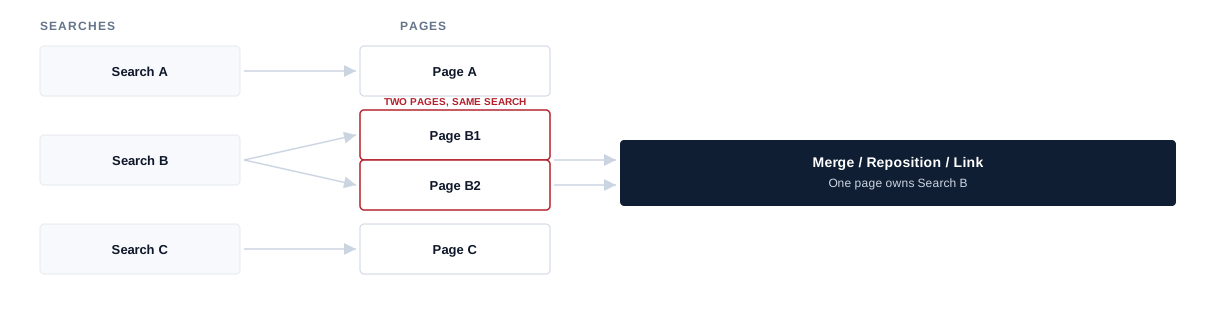
Keyword tools estimate demand; they do not measure it exactly, and difficulty scores are a rough guide rather than a verdict. Query data, the search results themselves, competitor pages and your own Search Console data show what people are looking for and what kind of page answers it. The most common finding is several pages competing for the same search so none of them does well; mapping important searches to the one page that should own each, and merging, repositioning or linking the rest, is often the first real improvement.
Technical SEO: find, specify, verify
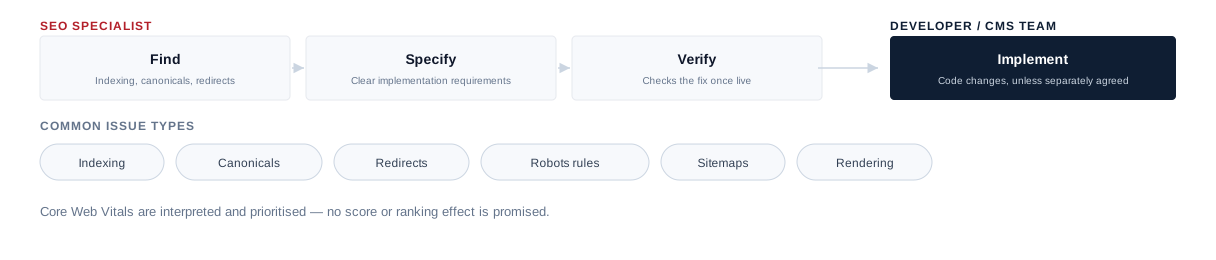
Many search problems are technical: pages that cannot be crawled or are excluded from the index, duplicate URLs and conflicting canonicals, redirect chains, sitemaps listing the wrong pages, robots rules blocking the wrong paths, JavaScript content search engines cannot render, and slow templates. The specialist finds these, explains them, writes clear implementation requirements and checks the fixes once they are live. Code changes are made by your developers or CMS team unless development is separately agreed. Core Web Vitals data can be interpreted and priorities set, but no score or ranking effect is promised. Deeper technical work is covered by our technical SEO service. Google’s own Search Essentials documentation covers the baseline technical requirements in more detail.
On-page, internal links and structured data
On-page work means making each page’s purpose clear: titles, descriptions, headings, the questions it answers, supporting context, image text and links to and from related pages. It is not about keyword density. Internal linking is planned so important pages are reachable and connected to related content, orphan pages are found and vague anchors are replaced with descriptive ones — not to a link count. Structured data types and fields are identified and implementations validated; schema helps search engines understand a page but does not guarantee rich results, rankings or citations. Where CMS access and your workflow allow, metadata, internal links and simple settings can be updated directly.
Working with your content team
SEO and content are different jobs that work best together. The SEO side provides the search reasoning — the question a page should answer, what already ranks, what is missing, how existing content could be refreshed — as briefs and draft reviews. Writing the content itself is done by your team or scoped separately. Pages are more useful when they show genuine experience, clear authorship and evidence, but E-E-A-T is not a score and author bios alone do not move rankings.
Before changes go live
Relaunches, redesigns, URL changes, domain moves and CMS migrations are where search visibility is most often lost. Reviewing plans before they ship — redirect maps, page ownership, templates, metadata and internal links — and checking indexing after launch is often the most valuable part of the role. Your developers implement the changes.
Search Console, analytics and reporting
Search Console shows which searches bring impressions and clicks, what is indexed, sitemap status, Core Web Vitals and any manual actions or security issues. Its data is sampled and delayed, so it is one source of evidence among several, alongside GA4 or your existing analytics where access is provided. A visibility drop is not automatically a penalty: manual actions are shown in Search Console, while most losses come from algorithm changes, competition or site changes, and recovery cannot be guaranteed either way. Setting up analytics, tag management or dashboards is separate unless agreed. Reporting format and cadence are agreed as part of the engagement.
Local, ecommerce and AI search
Businesses that depend on location or sell online have particular needs: location pages, business profile recommendations and consistent contact details, or category and product templates, faceted navigation, variants and product schema. These can be handled within your site, with deeper work available through our local SEO and ecommerce SEO services. Search results increasingly include AI-generated answers as well; clear, well-structured, evidenced pages that answer real questions are easier for search engines and AI systems to understand and cite, and pages can be shaped that way. Inclusion in any AI product’s answers is not guaranteed, and dedicated work is covered by our AI SEO service.
What this role does not include
The specialist does not buy links, build networks of sites or use tactics that put your domain at risk. Link-building and outreach campaigns, digital PR and paid placements are separate unless specifically agreed, and are never done through bought links. Paid search is a different discipline; if you need that too, see hiring PPC experts. Content production at volume, development work, conversion-rate optimisation, redesigns, analytics implementation and project management are not included automatically.
What SEO can and cannot promise
Rankings, traffic, leads, rich results and AI citations depend on competition, your site’s existing authority, content, technical condition, implementation speed, market demand and search engines’ own changes. The work follows publicly documented search guidance and what your site’s data shows; nobody has privileged knowledge of ranking systems. What the specialist can promise is sound decisions, clear priorities and honest reporting — not positions or traffic figures.
Joining your team
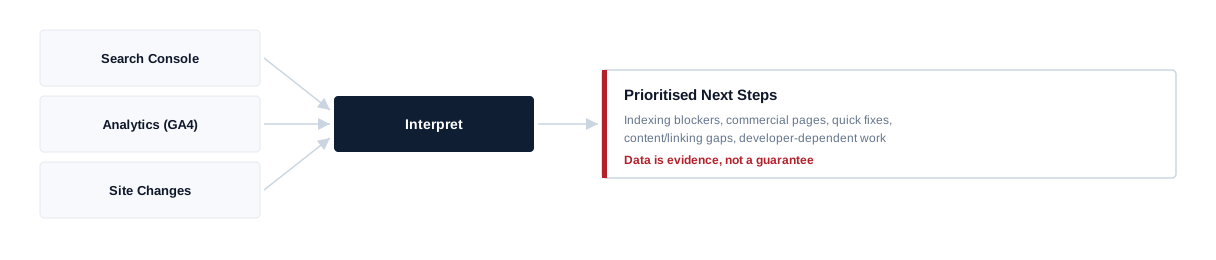
Onboarding starts with your website and platform, target markets, priority services or products, Search Console and analytics access, any previous SEO work and reports, the current content, known technical issues, backlink history, whether local or ecommerce search matters, and who can implement changes. A first contained task — reviewing indexing on your key pages, or mapping one section’s searches — produces a short prioritised list before larger work: what is blocking indexing, which pages matter commercially, quick technical fixes, content and linking gaps, and work that needs developer time. How long this takes depends on the size of the site.
Onboarding sequence
- 01 Website + platform
- 02 Target markets + priorities
- 03 Search Console + analytics
- 04 Existing SEO/content/history
- 05 Technical/linking/local/ecommerce context
- 06 First contained audit/mapping task
Specialist or SEO service?
If you want SAM to own your SEO — strategy, prioritisation, execution and reporting for a defined scope — rather than add a specialist to your team, see our SEO services. A dedicated specialist suits teams that run their own marketing and need search expertise inside it.
Hire an SEO specialist
Hire a specialist for continuing work your team directs.
SEO service
Use the service when you want SAM to own SEO for a defined scope.
Related
- Hire Dedicated ResourcesOther specialists, and how a dedicated engagement works.
- SEO ServicesSAM-managed SEO strategy and execution for a defined scope.
Our SEO experience
Our SEO team works on client sites and our own, including search work for a Delhi NCR manufacturer of defence and aerospace antennas. We are not publishing results from that work on this page, and it was a project engagement rather than a dedicated-resource placement; it shows the SEO work our team does, not who is free on a given date.
Hire SEO Experts FAQs
Hire SEO Experts
Need SEO capacity in your team?
Tell us about your website, target market, current SEO setup and the work your team needs help with. We will review the requirement, confirm suitable availability and explain how the engagement could work.


