SAM Web Studio · Enterprise Next.js
Enterprise Next.js Development
Enterprise Next.js platforms for organisations whose website carries commercial weight: fast under load, readable by search and AI assistants, and handed over so your team owns it.
- Since 2012
- Delhi NCR
- Enterprise delivery
- Server rendering
- Core Web Vitals
- Full handover
- LCP Target
- ≤2.5s
- CLS Target
- 0.00
- Source Code
- 100% Ownership
We work with companies running multi-page corporate sites, B2B portals, SaaS products and customer areas — usually replacing a platform that has become slow under real traffic, expensive to change, or dependent on whoever originally built it. Migrations from WordPress, custom PHP and ageing React front ends are a large part of what we do, with URLs and content protected on the way across.
Why businesses choose Next.js
Most slow websites are slow for one of two reasons. Either they send an almost empty page and a large bundle of JavaScript, leaving the browser to assemble everything after it arrives, or they rebuild every page from the database the moment somebody asks for it. Both make the visitor wait, and both get worse as traffic and page count grow.
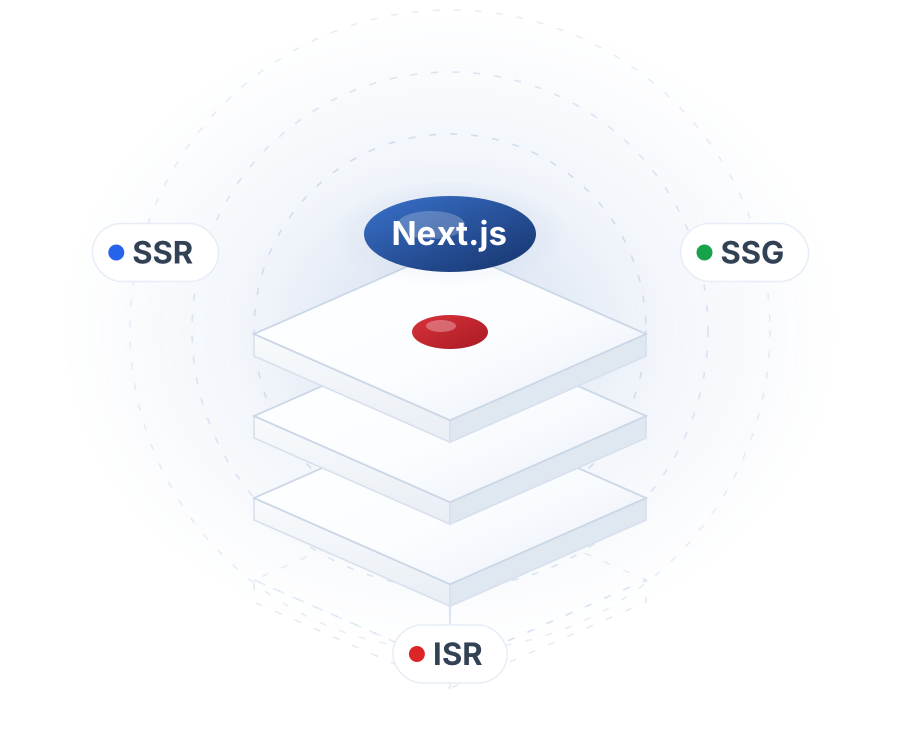
Next.js removes that wait by deciding, per page, when the work happens. Static generation builds a page ahead of time and serves it from cache. Server-side rendering composes it per request where the data has to be live. Incremental static regeneration sits between the two, refreshing a cached page on a schedule so an editor's change appears without rebuilding the site. The App Router and React Server Components keep data access and business logic on the server, so less code reaches the browser and pages stay responsive on mid-range devices and slower connections.
Four commercial problems follow from that:
- Visitors leaving before the page appears. Content arrives in the first response instead of after a script executes.
- Pages that crawlers and AI assistants cannot read. They receive complete HTML rather than an empty shell that depends on JavaScript running first.
- Sites that slow down as they grow. Adding two hundred pages does not slow the first one, because pre-built pages are served from cache at the edge.
- Platforms that become expensive to change. Features are built against your own model rather than assembled from plugins with independent release cycles.
None of this requires you to hold the detail. It matters because it is measurable — in Core Web Vitals, in crawl and indexing reports, in what an answer engine quotes when somebody asks about your category, and in what the second year of ownership costs compared with the first.
One platform, one set of standards
Why a change in month twenty costs what it did in month two
Most enquiries describe the same website: slow under campaign traffic, expensive to change, invisible in search, and dependent on whoever built it. That is rarely a coding problem. It is what happens when a site grows by accumulation — a plugin here, a template override there, a second content system for the campaign nobody wanted to wait for.
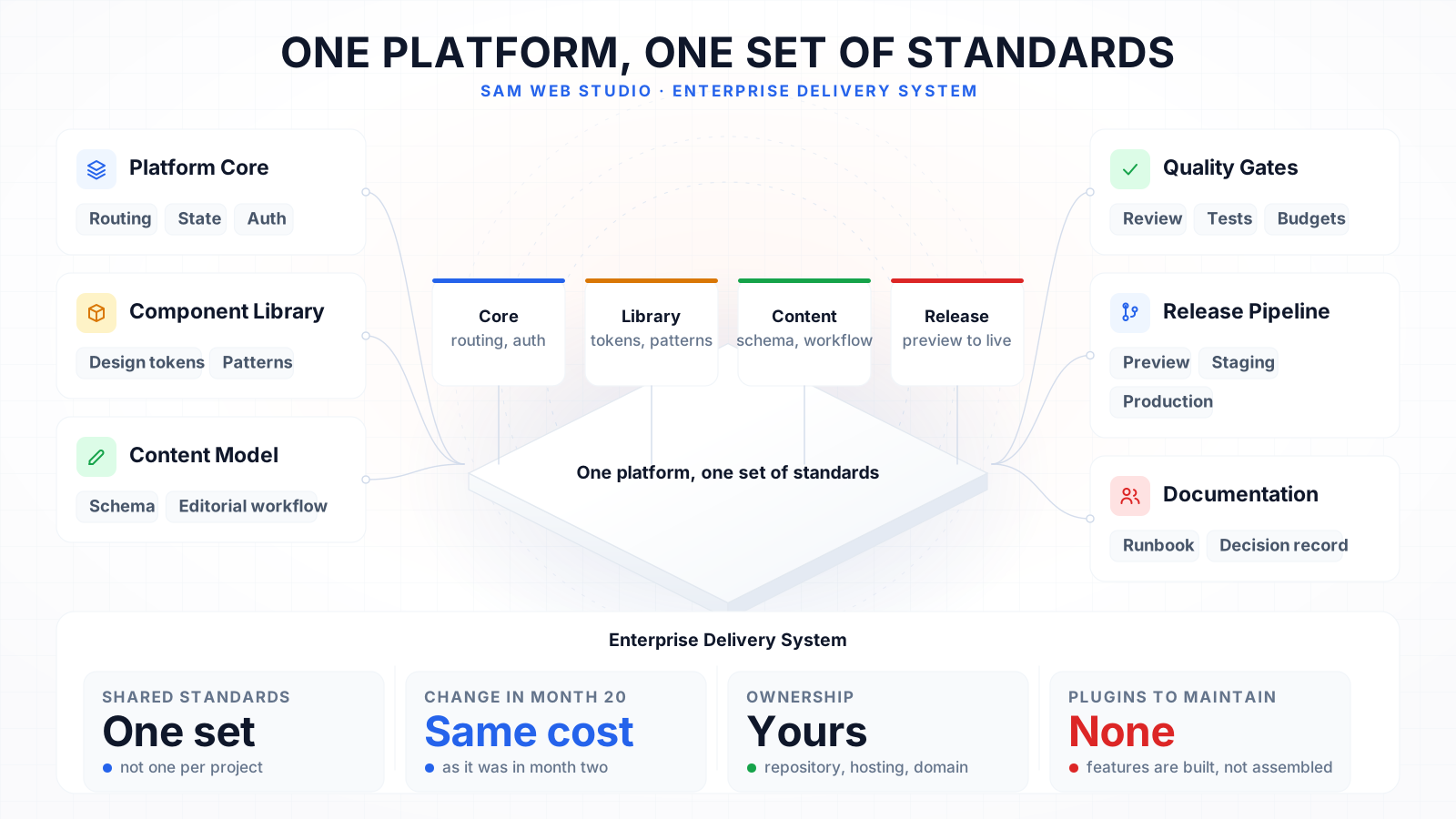
An enterprise Next.js platform replaces accumulation with a single set of standards. One routing model in the App Router, one component library, one content model, one release pipeline, one way to authenticate. Rendering strategy is chosen per route rather than imposed site-wide, so a marketing page can be statically generated while a signed-in dashboard is server-rendered, without maintaining two codebases to achieve it.
The commercial effect shows up later. Because every page is built from the same primitives, a change in month twenty touches about as many files as the same change would have in month two, and a developer joining in year three reads one system rather than five. Scaling becomes a matter of adding routes and cache rules instead of adding exceptions.
How a project actually runs
Seven stages, each closing with a written sign-off
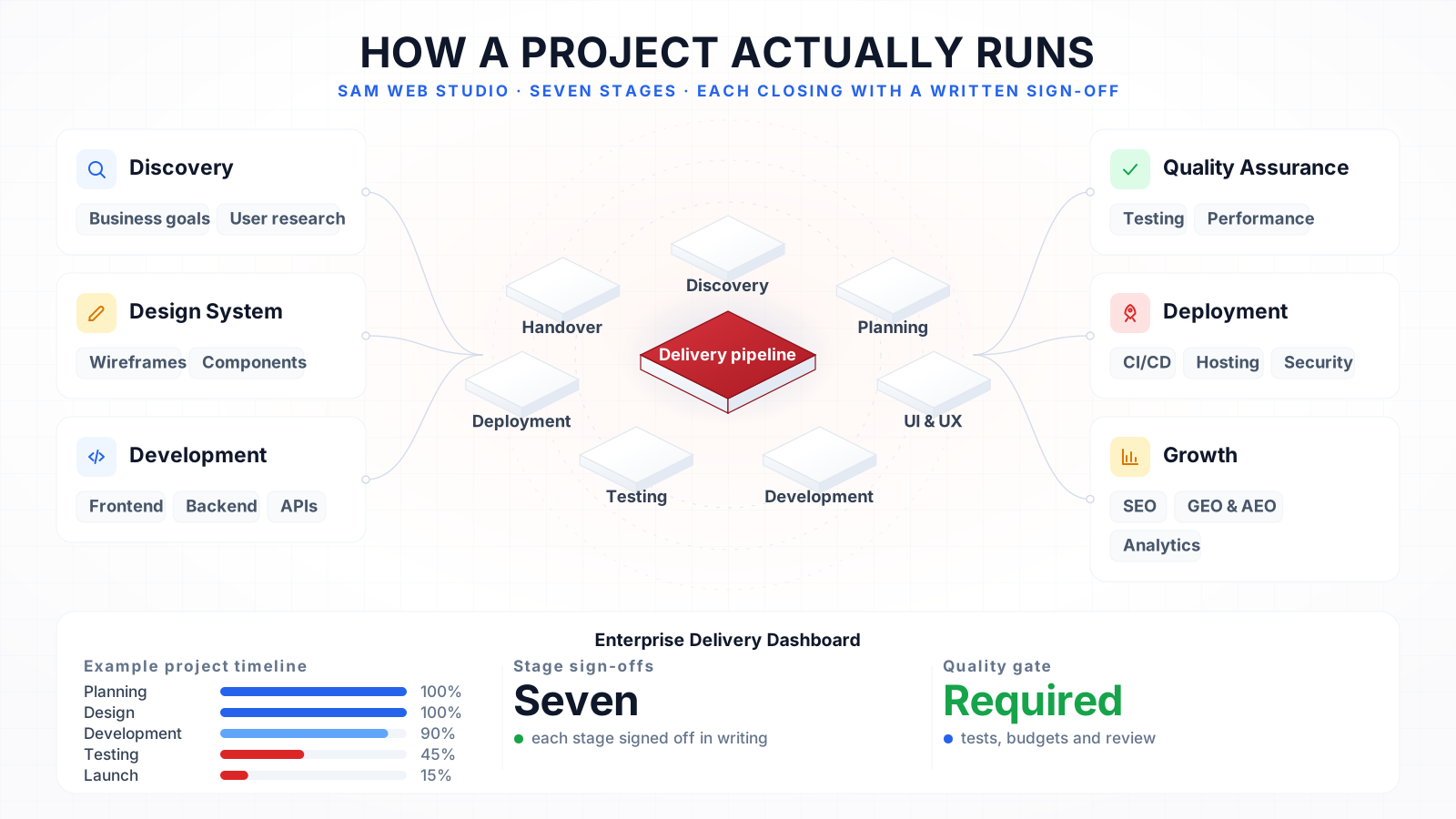
Discovery, planning, UI and UX, development, quality assurance, deployment, then handover and support. Seven stages, each closing with a written sign-off — which is what makes the next one estimable rather than optimistic.
Discovery establishes what the business needs and from whom, including the integrations and approval paths that usually surface late and cost most. Planning turns that into scope, information architecture and a rendering strategy for each template, so nobody discovers in week nine that a page needed live data. Design is proven at wireframe stage, then components are built once and reused everywhere rather than redrawn per page.
Development runs in a DevOps pipeline from the first commit: branches, code review, automated checks, and a preview environment for every change so stakeholders comment on a working URL instead of a screenshot. Quality assurance tests against the agreed performance and accessibility budget, not against opinion. Deployment is a staged release with a rollback path that has already been exercised.
The structure is not ceremony. It is what keeps scope, cost and timeline legible to a procurement team while the work stays legible to the engineers doing it.
What we build on
Including the Laravel layer many clients keep rather than replace
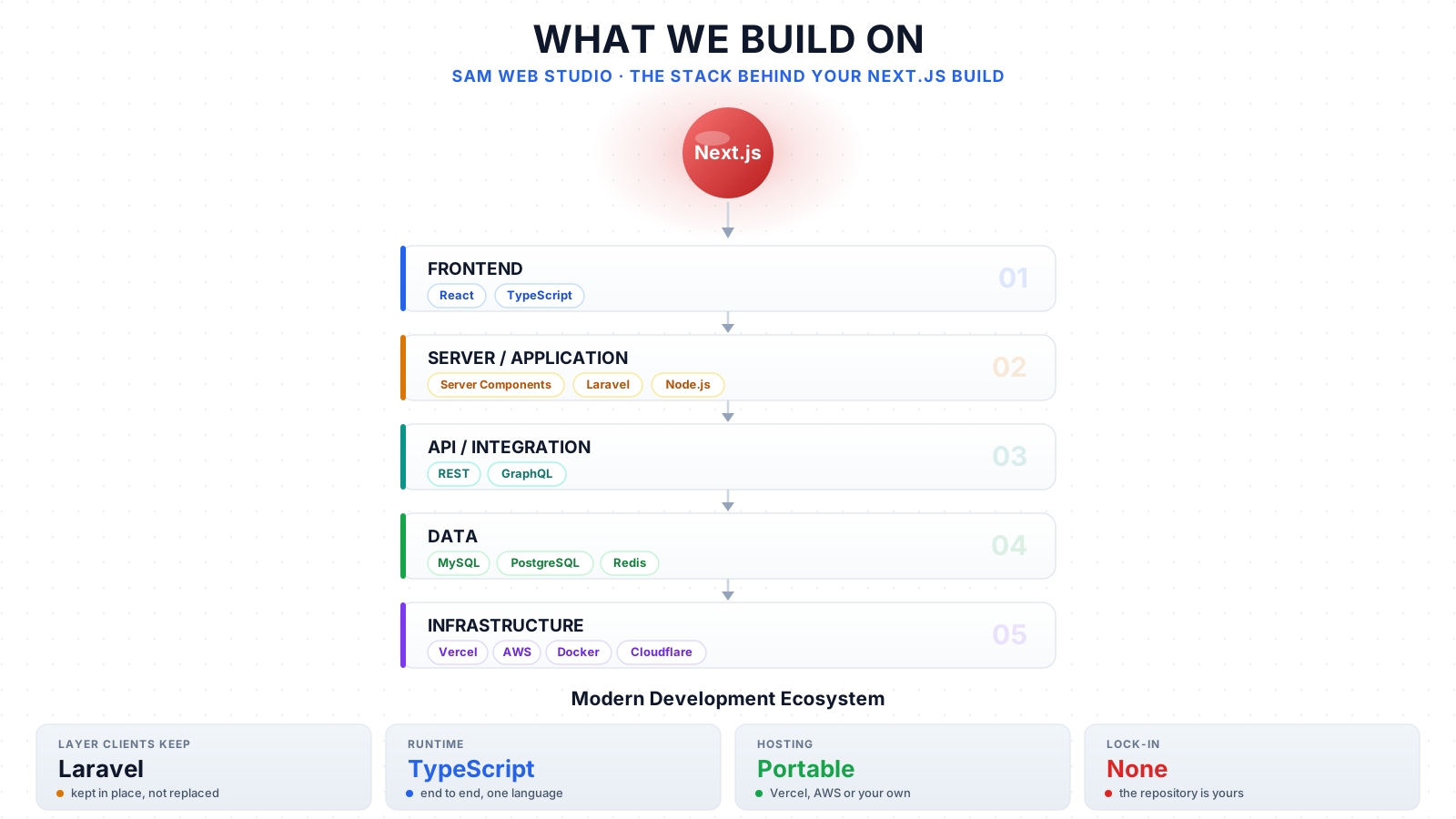
Next.js with the App Router, React Server Components and TypeScript on the front end, so types run from the data call through to the rendered component and a rename fails at build time rather than in production.
Behind it, whatever the business already runs. Many clients arrive with a working Laravel application — an admin, a billing model, years of accumulated business rules — and the sensible move is to keep it and put Next.js in front, consuming it over REST or GraphQL. Others need a Node service, or both side by side. Data sits in MySQL or PostgreSQL, with Redis for sessions and caching where the volume justifies it.
Delivery is containerised with Docker and automated through GitHub Actions, so the environment that passes tests is the environment that ships. Hosting is deliberately portable — Vercel, AWS, Cloudflare or your own infrastructure — chosen against your compliance and cost position rather than our convenience.
Nothing here is exotic, and that is the point. The stack is chosen so a competent in-house team can maintain it after handover, which is a constraint on the architecture rather than an afterthought to it.
Core Web Vitals, treated as a budget
Targets before development, Lighthouse during, field data after
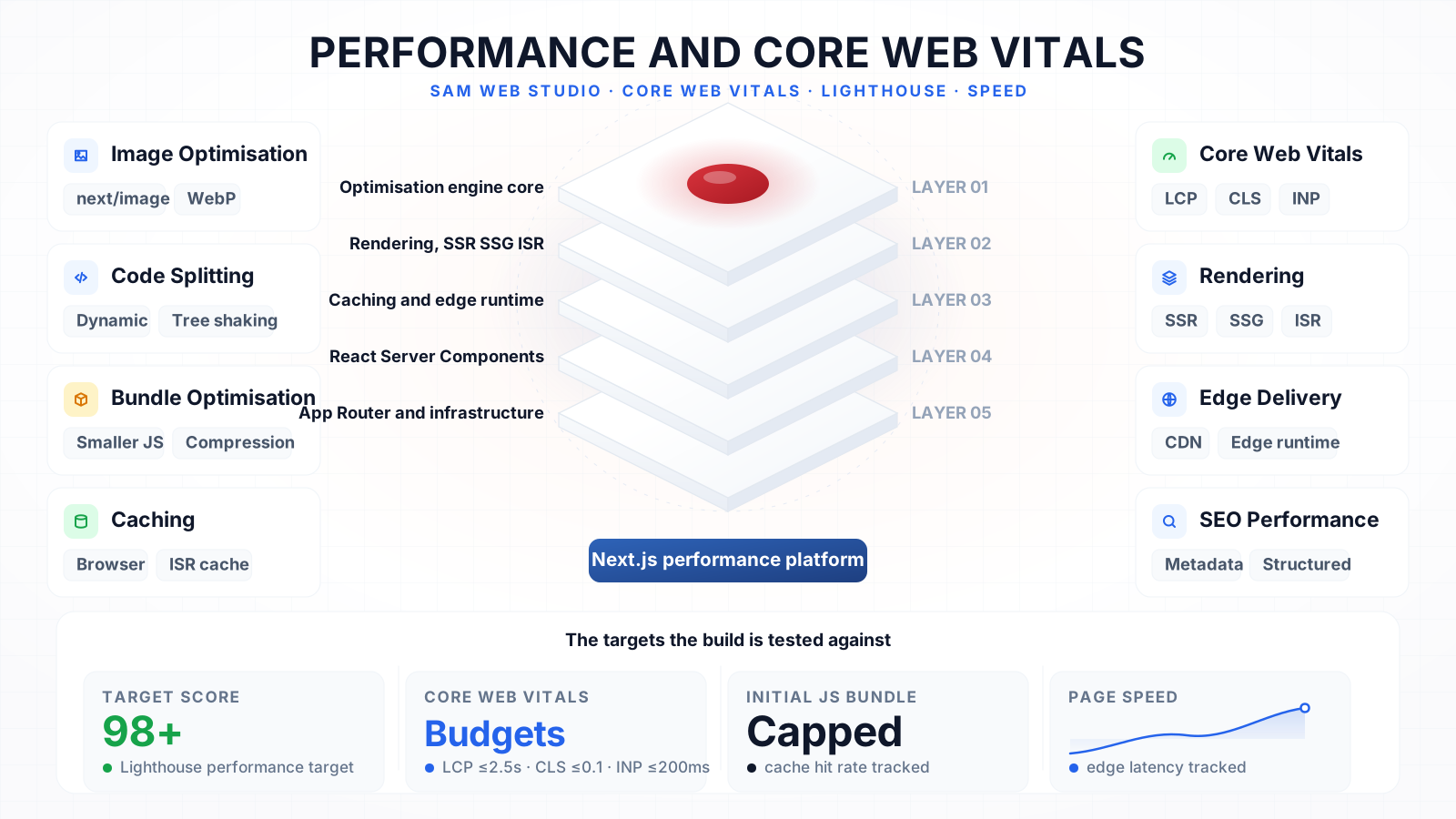
Largest Contentful Paint at or under 2.5 seconds, Interaction to Next Paint at or under 200 milliseconds, Cumulative Layout Shift at or under 0.1. Those numbers go into the specification before development starts, which changes what gets built rather than what gets excused afterwards.
In practice that means choosing rendering per route, caching deliberately, and shipping less JavaScript. Static pages are served from a CDN at the edge, close to the visitor rather than to the origin. Incremental regeneration keeps them current without rebuilding the site. Server Components keep data fetching and heavy logic off the client entirely. Images are sized, converted and lazily loaded by the framework rather than by hand, and every media element carries intrinsic dimensions so nothing jumps as the page settles — which is how layout shift reaches zero instead of nearly zero.
Verification runs in three places: Lighthouse during development, synthetic checks in the pipeline so a regression fails a build rather than reaching a customer, and field data in Search Console afterwards, because real devices on real networks are the only measurement that finally counts.
Security decided at the architecture stage
Role-based access and audit trails are not features added later
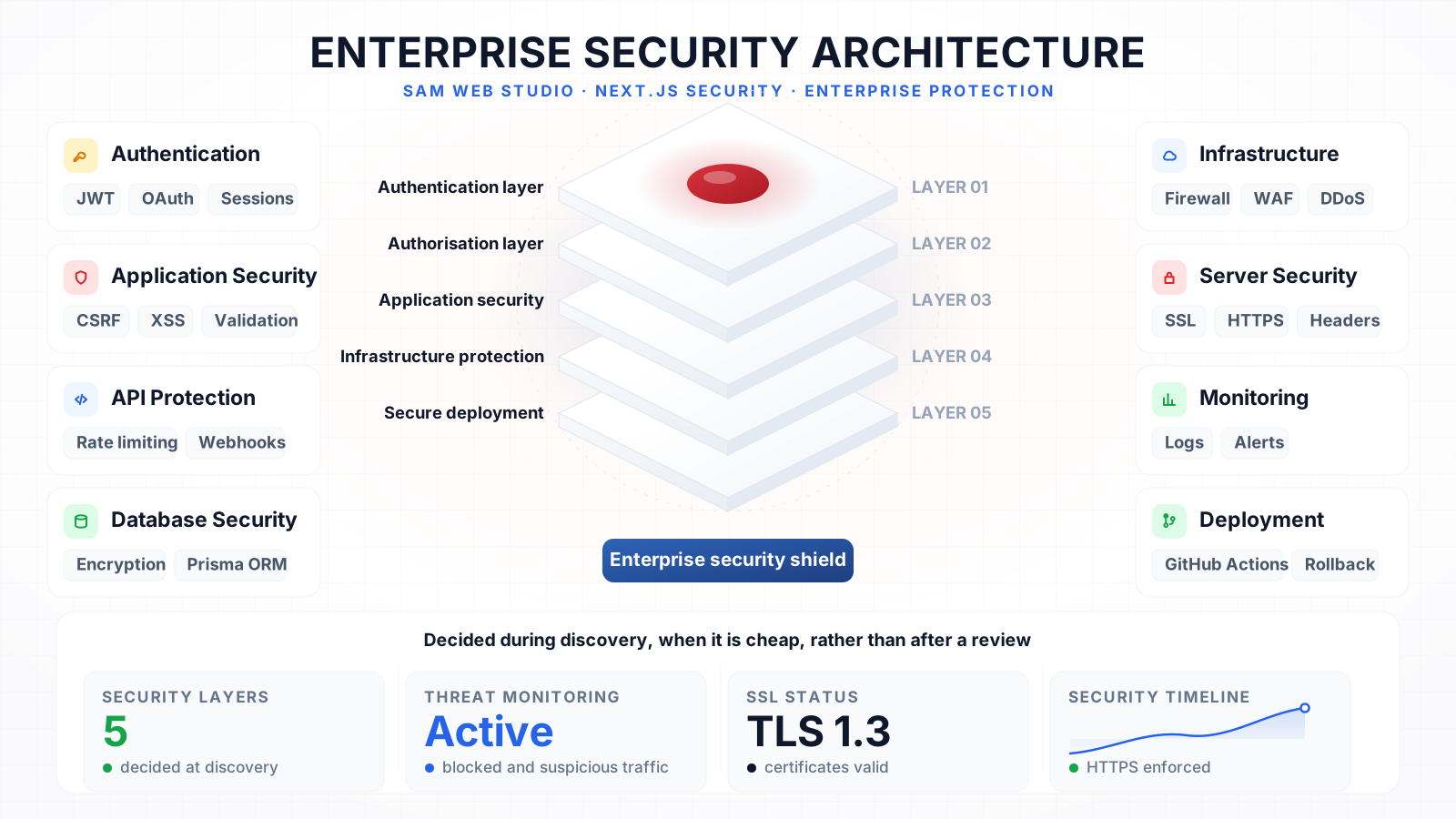
Authentication, authorisation, application hardening, infrastructure protection and secure deployment are decided during discovery, when they are cheap, rather than retrofitted into a live site under a deadline.
React Server Components help here more than they are usually credited for: queries, secrets and business rules execute on the server, and the browser receives output rather than the means to reproduce it. Role-based access is modelled against real job functions, so an editor, an approver and an administrator see different data because the server decided so — not because the interface hid a button. Audit trails record who changed what and when, which is the requirement that tends to arrive late in procurement and is expensive to add afterwards.
At the infrastructure layer that means enforced HTTPS, a considered content security policy, secrets held outside the repository, dependency scanning in the pipeline, and rate limiting on anything a public form can reach. Updates are applied on a schedule rather than when something breaks.
None of this is visible on the page. It is visible in the security review, which is where it gets asked about.
Built to be found, and to be cited
The same page read by crawlers, answer engines and assistants
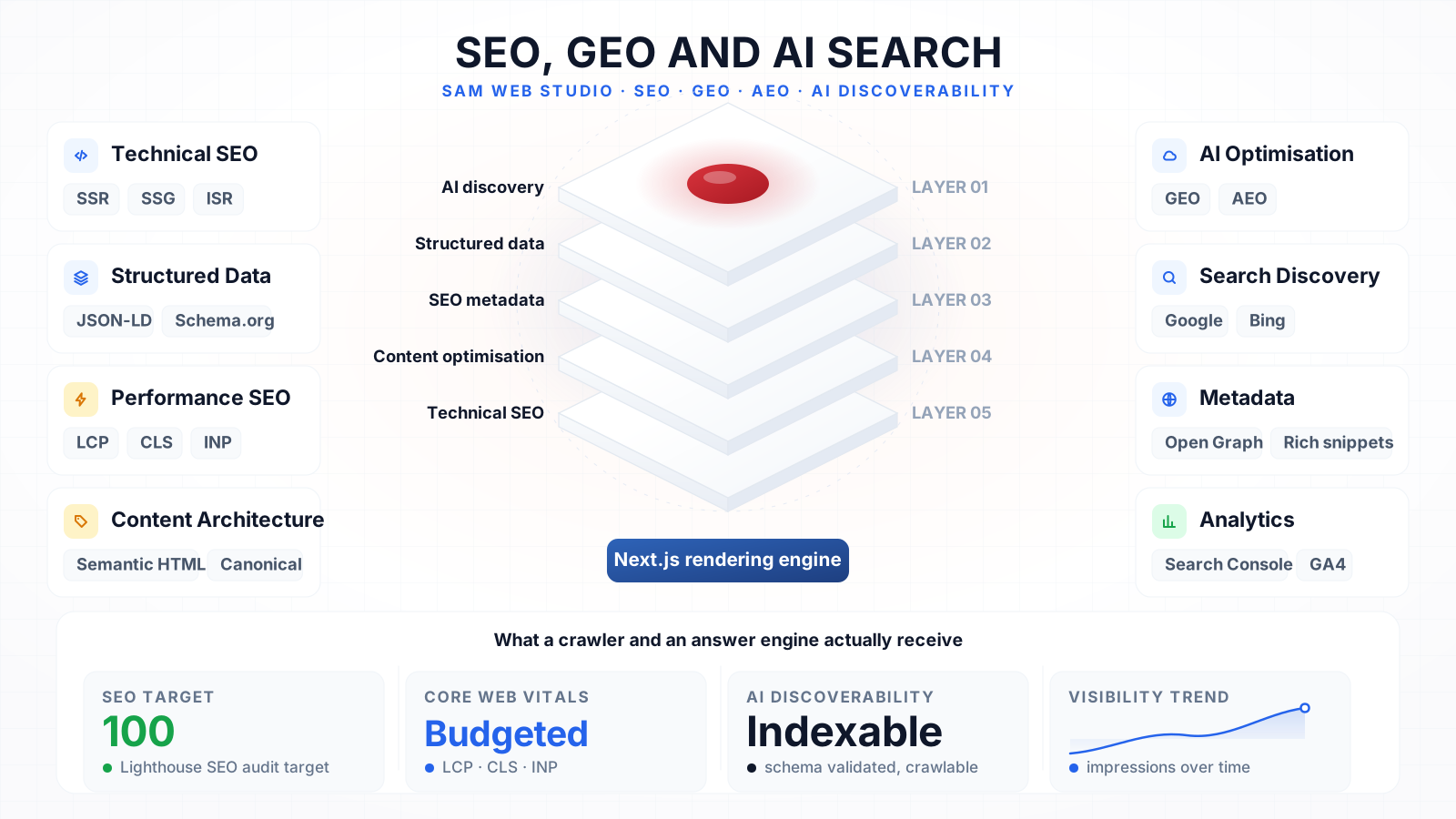
A server-rendered page arrives as complete HTML, which is what a crawler indexes and what a generative answer engine can quote. A browser-assembled page often arrives as an empty shell, and while search engines have largely caught up with JavaScript rendering, the assistants your buyers increasingly ask first have not — and have little incentive to spend the compute.
The practical work is unglamorous. Clean, stable URLs. One canonical per page. Metadata declared per route through the framework rather than injected by a plugin. Structured data describing the organisation, the service and the questions the page answers, so the content is machine-readable rather than merely readable. Redirects handled at the edge, so a migration does not spend its accumulated equity on chains of hops.
Two acronyms are worth naming because they now appear in briefs. Answer engine optimisation is about being the source a direct answer is drawn from. Generative engine optimisation is about being represented accurately when a large language model summarises your category. Both reward the same underlying work — retrievable HTML, explicit structure, and claims specific enough to be worth quoting.
Generative and answer engines otherwise reward much of what a careful editor would: a clear question, a direct answer near it, specifics instead of adjectives, and a page that does not contradict itself. None of this replaces content or earned authority, and no agency can honestly promise a position — but a page that cannot be read cannot be cited.
Deployment is routine, not an evening
A rollback path tested before it is needed
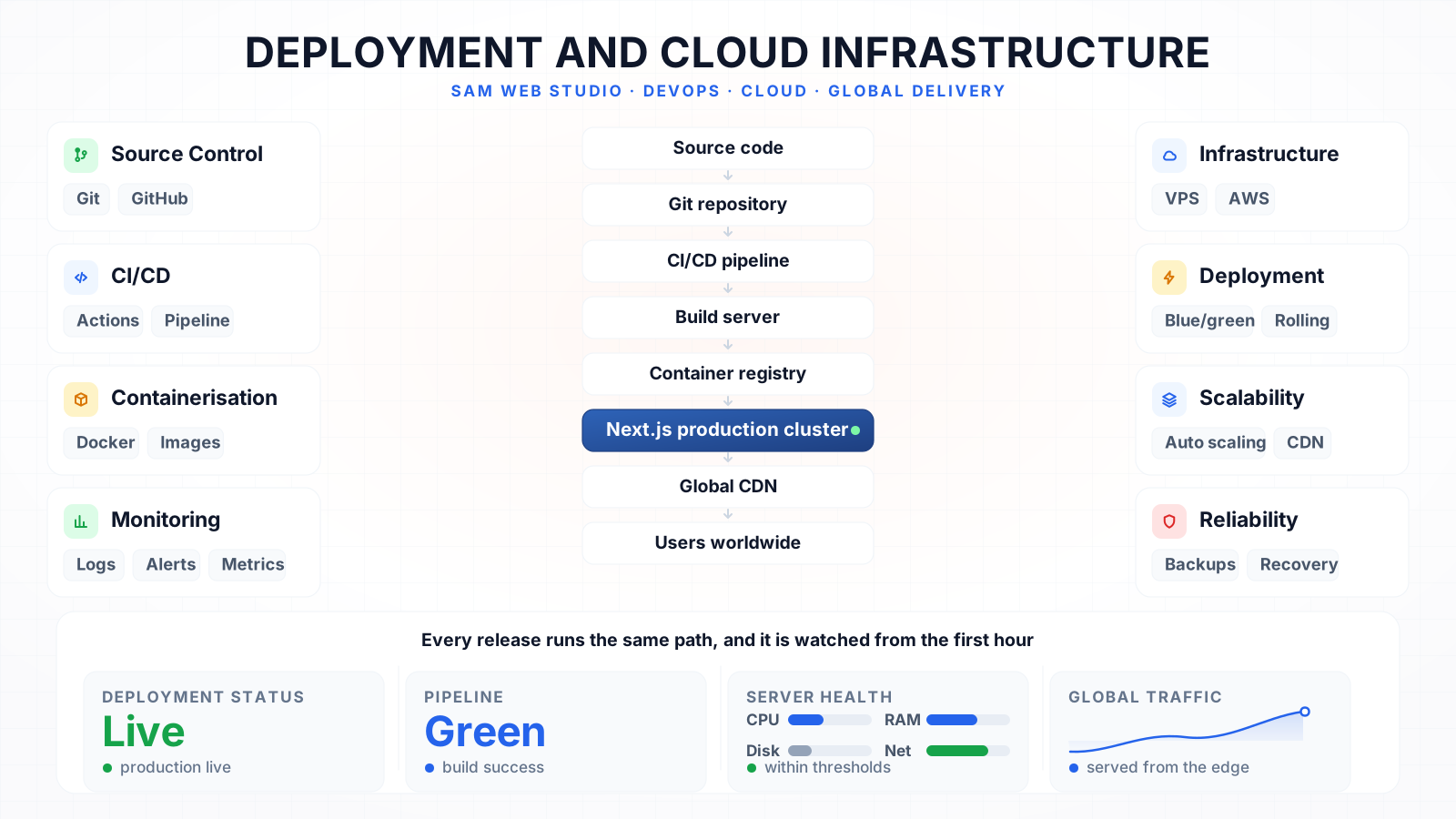
Releases run through a CI/CD pipeline. Every branch builds, tests and lints automatically, and every pull request gets a preview URL a stakeholder can open. Nothing reaches production that has not already been built and checked in an identical environment.
Production releases are staged and atomic — the new version is built, verified, then switched to — so there is no window in which half the site is old and half is new. The previous version stays available, which is what makes rollback a decision rather than an incident. Tested is the operative word: the moment you need a rollback is the worst possible moment to discover the path does not work, so we exercise it before launch and again after significant changes.
DNS and certificate changes are planned around their propagation windows rather than attempted at six on a Friday. Monitoring — uptime, error rates, Core Web Vitals and crawl and indexing reports — is live from the first hour, rather than added after something has gone wrong and nobody can say when it started.
Handover is not the end
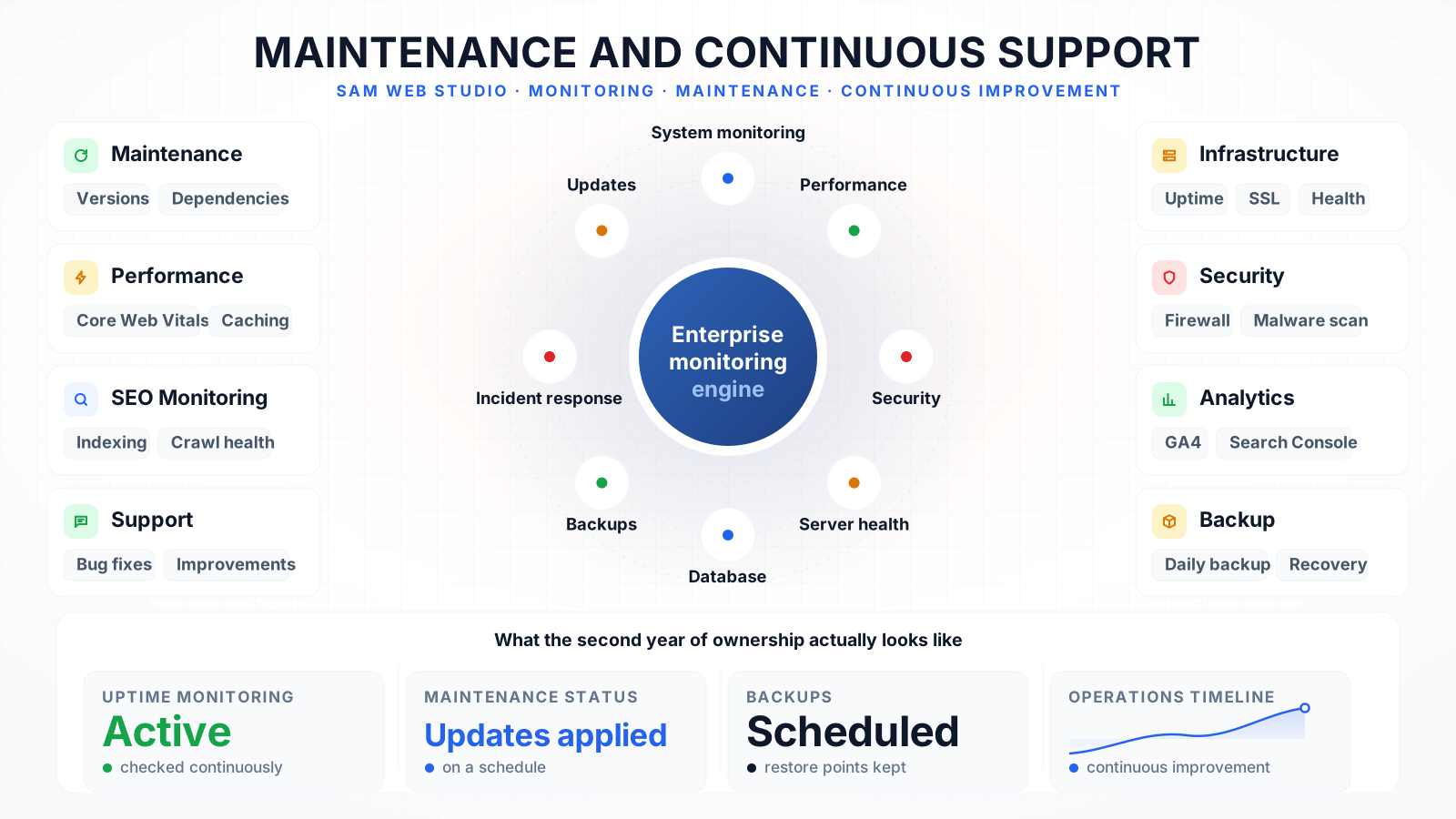
Version updates, Core Web Vitals, crawl health and uptime carry on
The repository, hosting accounts, domain and credentials sit in your name from week one, rather than being transferred at the end as a goodwill gesture. Handover includes architecture notes, a runbook covering the operations your team will actually perform, and the reasoning behind decisions that would otherwise look arbitrary to whoever inherits them.
After launch a platform needs maintaining rather than merely hosting. Framework and dependency versions move, and Next.js moves quickly, so updates are applied deliberately on a schedule with a staging pass rather than in a rush after a vulnerability disclosure. Core Web Vitals are watched as field data, because a third-party script added by a marketing team can undo a quarter of performance work in an afternoon. Crawl health, indexing coverage and uptime are monitored continuously.
Support runs against an agreed response window, and continued development runs to the same standards as the original build — so that month twenty-four does not quietly turn into a rewrite.