







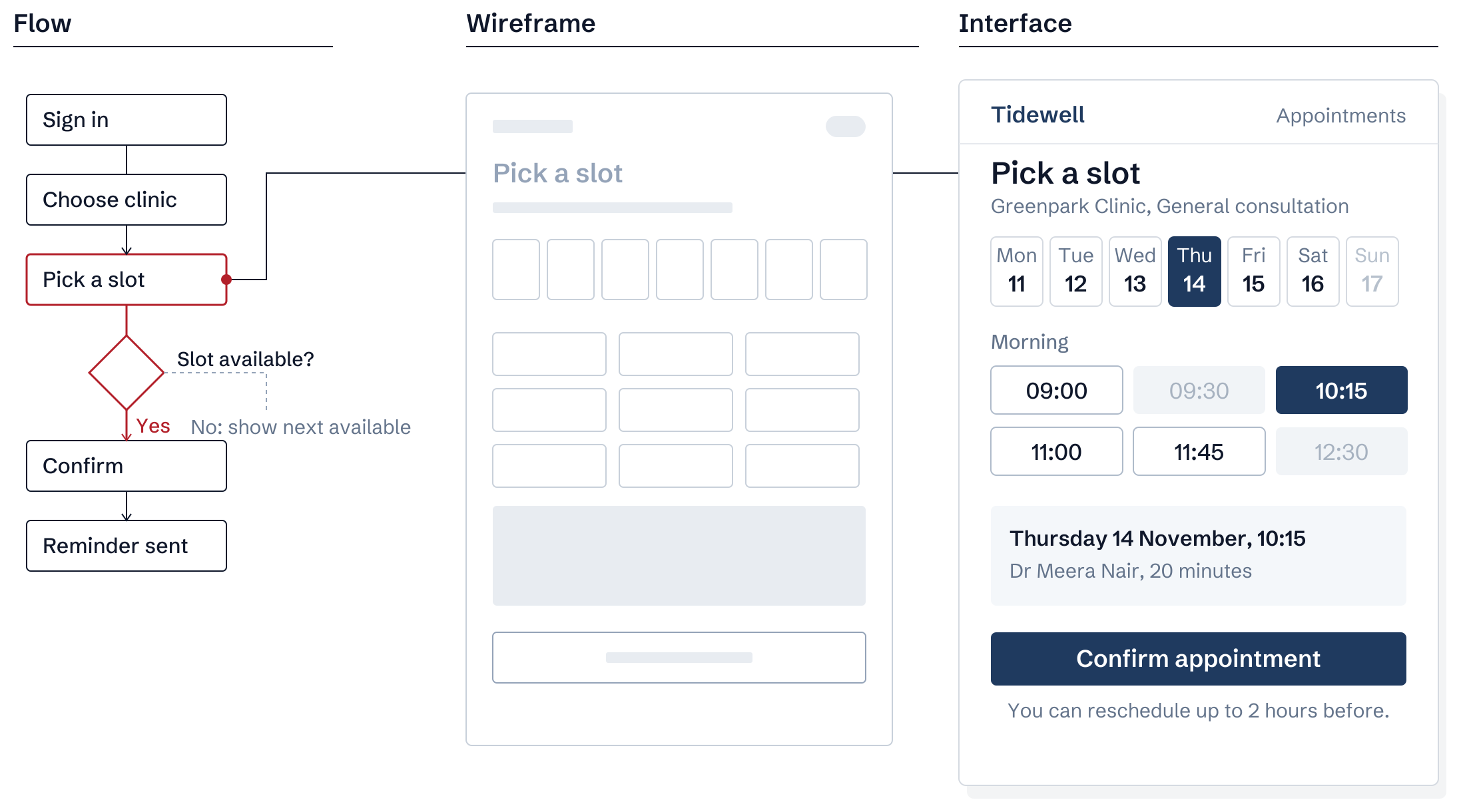
Website design
Website Designing Company in Delhi
Website design built around what visitors need to understand and do. We plan the structure, content hierarchy, mobile layouts and enquiry paths of business websites, design them, and then build them ourselves or hand them to your developers. Based at A-117, 2nd Floor, Sewak Park, South West Delhi-110059, India, working with businesses across Delhi, India and abroad.

Rated by clients
4.3–5.0across 6 review platforms
When professional website design is worth it
Not every business needs a custom-designed website.
If you need a few simple pages quickly and your content fits a well-made template, that can be the right call, and we will say so. Professional design earns its cost when the website has to explain several services clearly, establish credibility before anyone calls, serve different kinds of visitor, carry proof such as projects and reviews, or look as considered as the business behind it — especially when competitors' sites are doing that better.
Website design services
Explore our website design services
Website design includes three specialist services: UI/UX design, ecommerce website design and website redesign.

02
Ecommerce Website Design
We design online stores around the shopping journey: how customers find the right category, narrow down products, understand what they are buying, choose options, review their cart and check out, on phones as much as desktops.
Explore Ecommerce Website Design
03
Website Redesign
Redesigning a website does not mean deleting it and starting again.
Explore Website RedesignWhat good website design actually solves
The problems we are asked to fix are rarely about colour.
Clarity
- Visitors cannot tell quickly what the company does or who it serves.
- Calls to action are vague or compete with each other.
Structure
- Important services are buried two clicks deep.
- Every page follows a different pattern, so the site feels assembled rather than designed.
- Long pages have no hierarchy, so nothing stands out.
Proof
- Case studies and reviews sit on pages nobody visits.
Responsive / delivery
- Mobile layouts feel like squeezed desktop pages.
- Content arrives after design and breaks the layouts.
- Developers receive designs that leave too much to guess.
Each of these is a design problem with a design answer.
Website design or website development?
- Designwhat the site communicates
- Website design decides what each page communicates and in what order, how the site is structured and navigated, how it looks, and how it behaves on phones, tablets and desktops.
- Developmenthow it is built
- Website development decides how it is built: the CMS or framework, the code, integrations, performance and deployment.
We do both, and plan them together, but they are separate decisions — a strong design can be built on several different platforms.
Website design or UI/UX?
Website design is for public-facing sites, where visitors read, compare and enquire. If your project is mainly about people completing tasks across many screens — an account area, dashboard, portal or app — that is UI/UX design, which works with user flows, interaction states and prototypes. Many projects need both: a marketing site designed here, and a product interface designed there.
How we think
How we think about website design
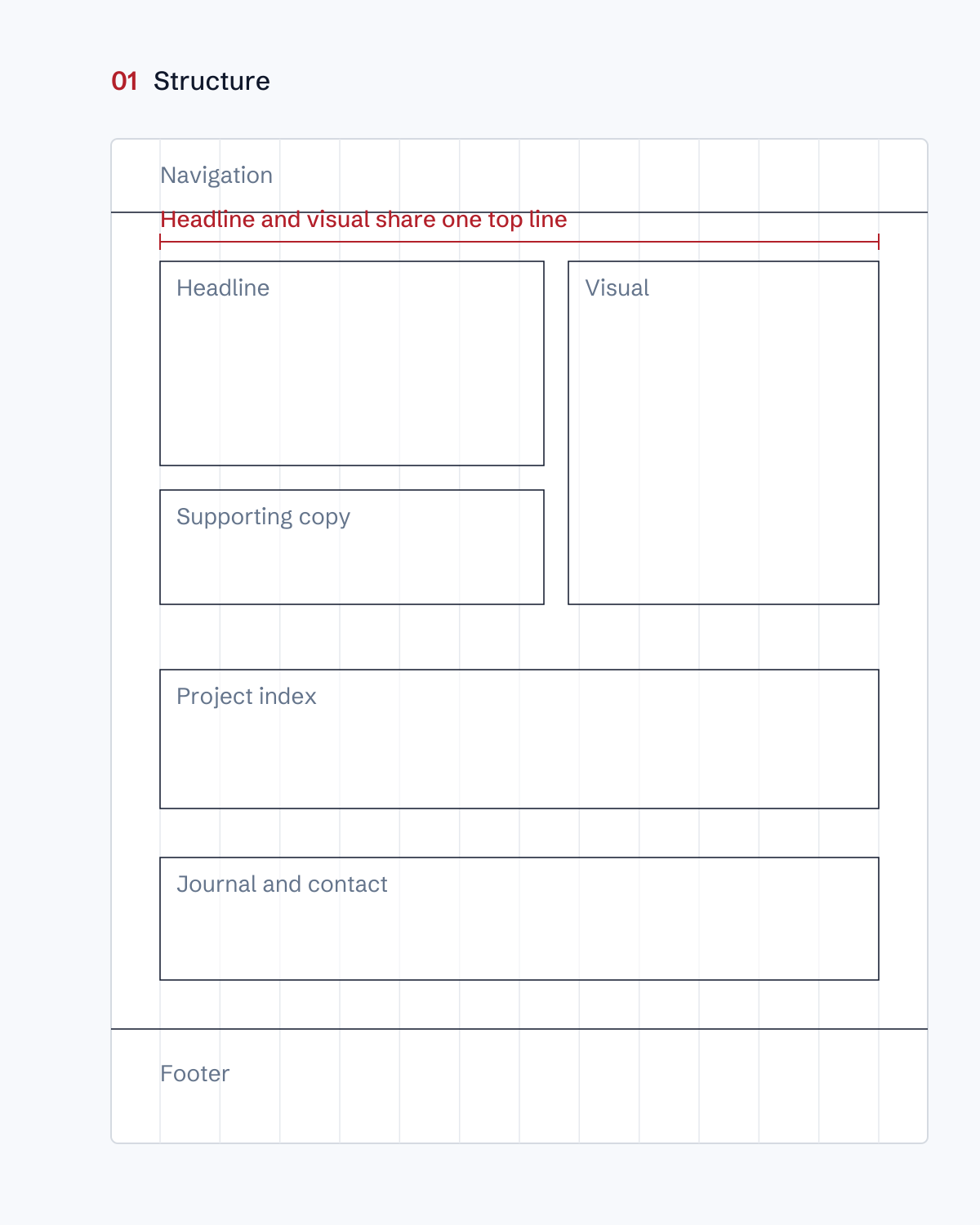
01Structure
Planning the website before visual design
Visual design comes after a set of plainer decisions. What does a visitor need to understand in the first few seconds? Which pages does the business actually need, and what must each one achieve — explain a service, prove capability, capture an enquiry? What evidence exists, and where should it appear? How will people move between pages, and what is the one next step on each? Answering these first is what stops a site from looking finished but working poorly.
Site structure and navigation
We map the pages before designing them: the main sections, how services are grouped, where case studies, industries and resources sit, and which pages the navigation must reach in one step. For service businesses, the structure usually matters more than any single page, because it decides whether a visitor finds the right service at all. Menus are kept to labels visitors would actually use, and larger sites get supporting navigation such as breadcrumbs and related-page links.
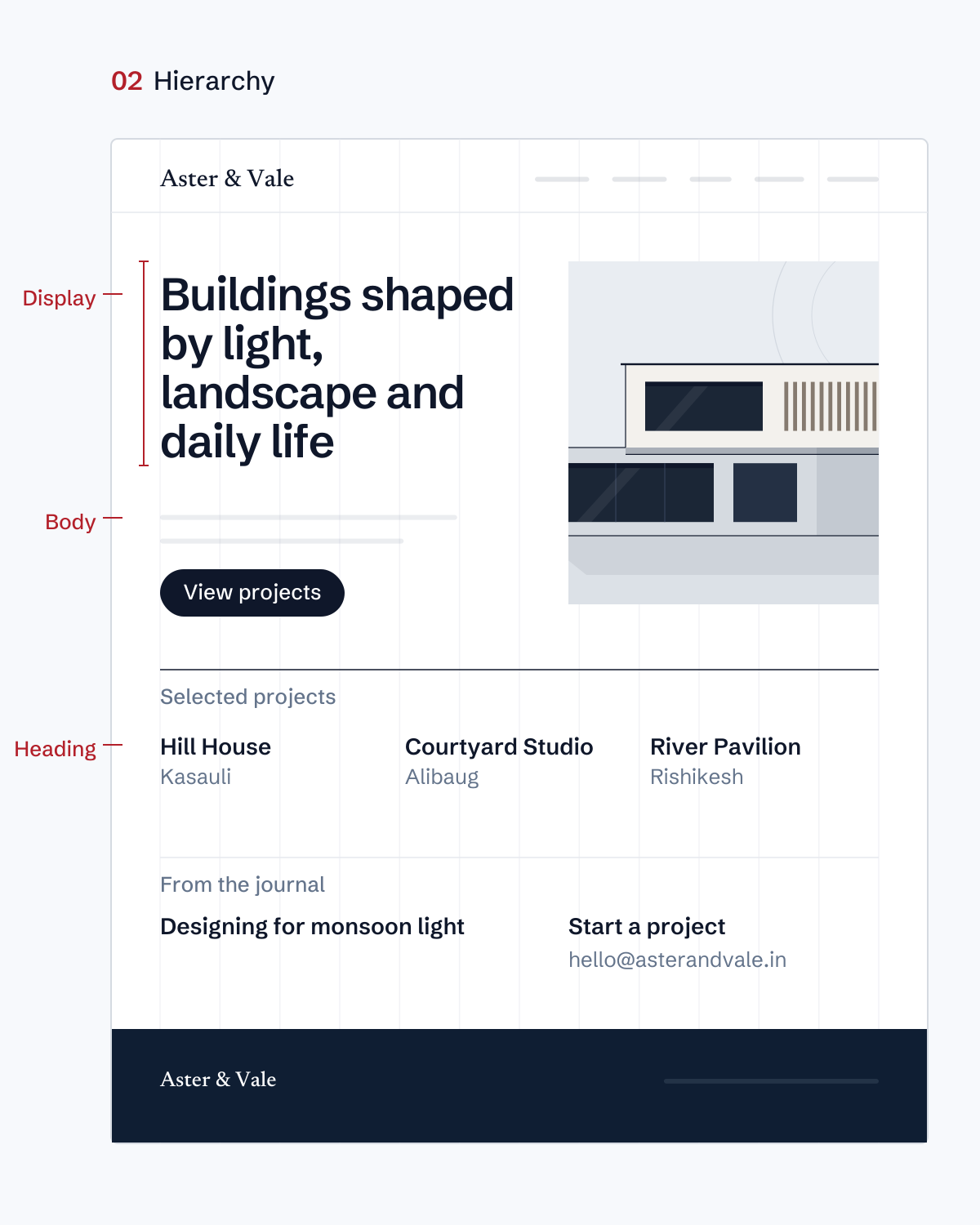
02Hierarchy
Homepage design
A homepage has a few jobs: make clear who the business is and who it serves, show the main offers, establish credibility, route visitors to the right deeper page, and make the next step obvious. The order depends on the business — a firm known by name can lead with its services, while a new business may need proof earlier. We design the homepage as a set of routes into the site rather than a place to say everything.
Service and content pages
Service pages do most of the persuading on a business website, so we design them with care: a clear H1 and opening that states what the service is, sections in the order a buyer's questions arise, evidence placed next to the claim it supports, text set at a comfortable reading width, subheadings that make long pages scannable, jump links where the page is deep enough to need them, supporting images that explain rather than decorate, related-service links, and a call to action where a reader is ready rather than only at the bottom.
Designing with real content
Final copy does not have to be written before design starts, but a designer needs to know roughly what is coming: how long headings run, how many services and what detail each carries, what proof exists, how many FAQs, which calls to action matter most, and what images are available. Layouts designed around placeholder text tend to break when real content arrives, so we design key pages with realistic content and adjust once the final text is in.
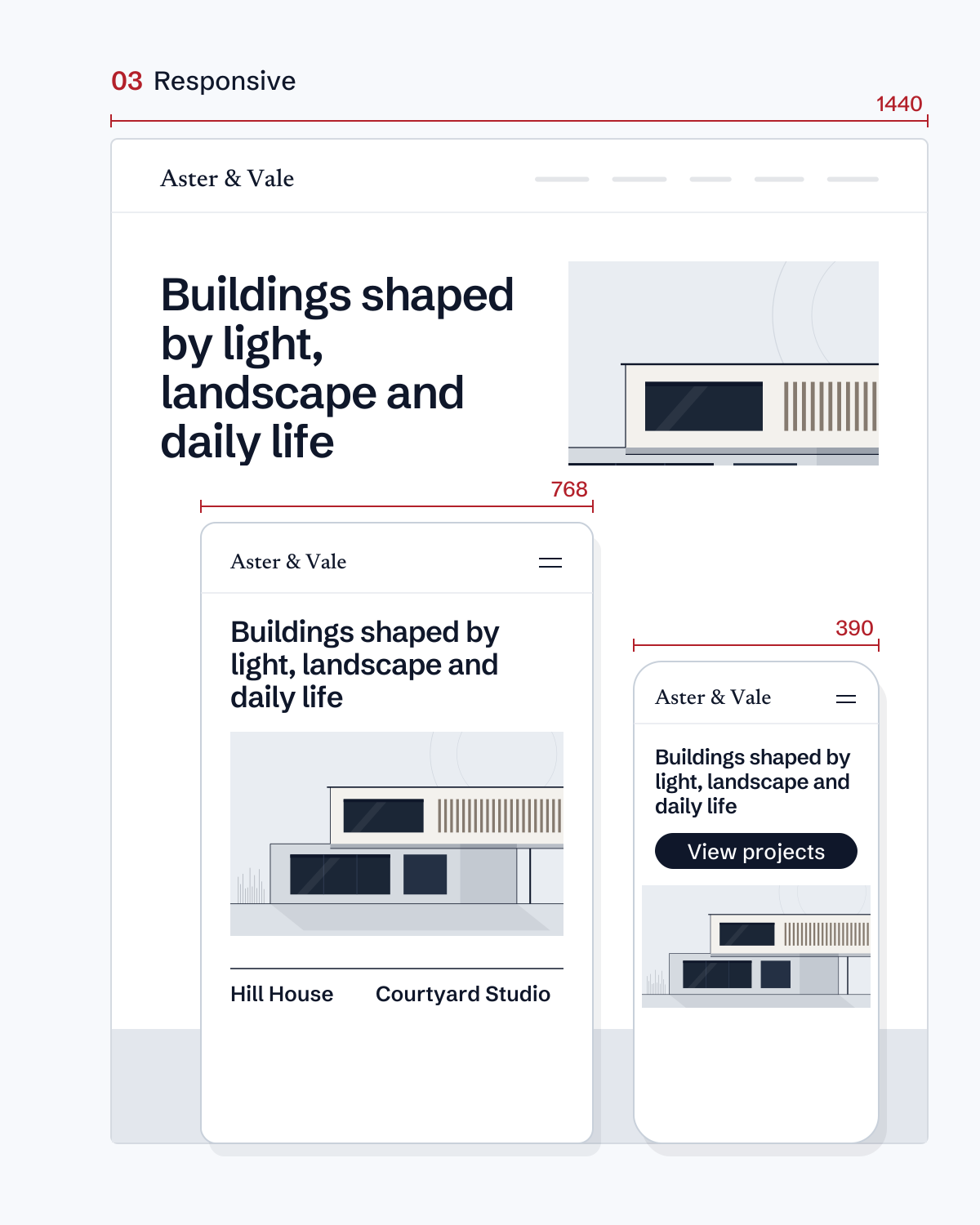
03Responsive
Responsive website design
We design how the site behaves on phones, tablets and desktops, not just how the desktop version shrinks. That covers how navigation collapses, how the hero and section order change on a small screen, how card grids reflow, how long text is kept readable, how images are cropped for each width, the size and spacing of buttons for touch, how forms work with a phone keyboard, how comparison tables stay usable, and whether any sticky or fixed element earns its space. Once built, pages are checked on real devices.
04System
Reusable website components
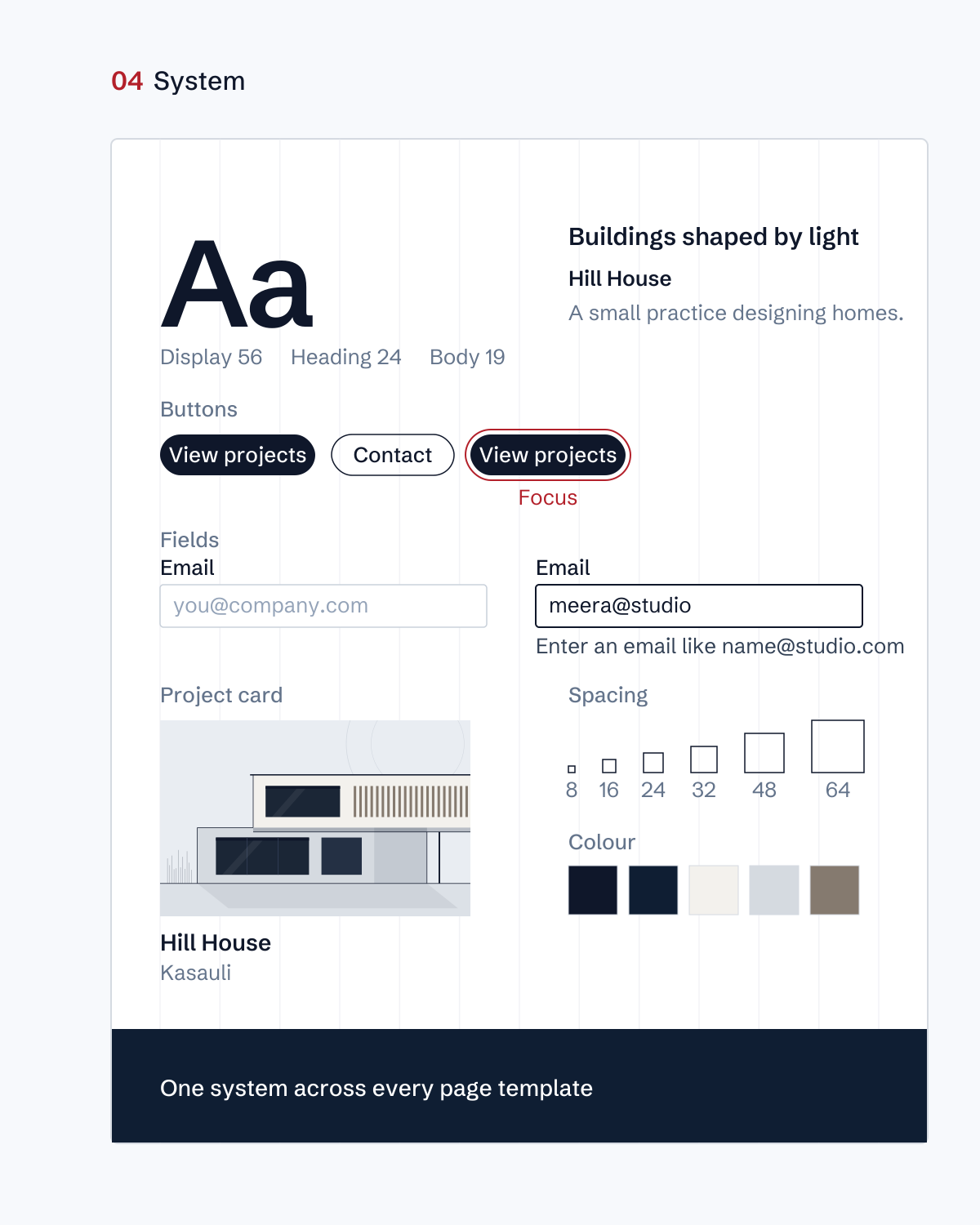
Consistent sites are built from a defined set of parts: header and navigation, buttons, service and project cards, testimonial blocks, accordions and FAQs, tabs, forms, call-to-action bands, breadcrumbs, comparison tables and the footer — each with its states and spacing rules. Larger sites benefit most, because new pages can be assembled from tested patterns instead of designed from scratch. A small site needs a smaller set, and we scale the system to the site rather than delivering a design system nobody will use.
Visual direction
Typography, colour, image style, icons, spacing and card treatment are chosen to suit the brand and the content, not a passing trend. Motion is used where it helps — hover and focus states, menu transitions, accordions opening — and left out where it would only slow someone down. If the business needs brand work first, such as a logo or wider brand graphics, we plan that alongside the website.
Forms and enquiry paths
Most business websites exist to start a conversation, so the route to an enquiry is designed deliberately: one primary action per page with secondary options kept quieter, short forms where a quick enquiry is enough and fuller ones where the details genuinely help, clear labels, error messages beside the field they refer to, a confirmation that tells people what happens next, and forms that are easy to complete on a phone.
Design quality
Proof and trust content
Visitors look for evidence before they enquire: real projects, reviews, certifications, client names where permission exists, team and process information, and straight answers to common questions. We make room for these in the structure, near the claims they support, instead of adding them after launch. Design presents proof clearly; it cannot make weak or missing proof convincing, so we tell you when a page needs better evidence.
Accessibility
We design for readable type, sufficient colour contrast, visible focus states, labelled form fields, clear error feedback, touch targets large enough to use, a logical content order, meaning that does not rely on colour alone, and motion that never blocks use. These are checked again during development and QA; a design alone cannot certify a website as accessible.
SEO-sensitive design decisions
Design affects how well a page can be read by people and search engines: a clear heading structure, readable text rather than text inside images, visible FAQs, internal links between related pages, evidence that can be quoted, and layouts that work on mobile. We also make sure important content is not lost when a design is simplified. None of this guarantees rankings or citations in AI answers — it removes design reasons for a page to underperform.
New design or redesign?
New website
Design from structure
Existing website
Keep what matters, then redesign
This page is mainly about designing a new website. If you have a site with content, URLs and rankings worth keeping, and it needs to look better, read more clearly or work on mobile, that is a website redesign, which starts by working out what should be kept. Online stores are covered separately under ecommerce website design.
Our work
Where website design fits in our work

Expert Bells
Expert Bells — a mentorship and consultation platform connecting founders with experts over video calls. We designed and built its front end, including the booking flow and the calendar experts use to set their weekly availability. Read the Expert Bells case study.
GV Roofs
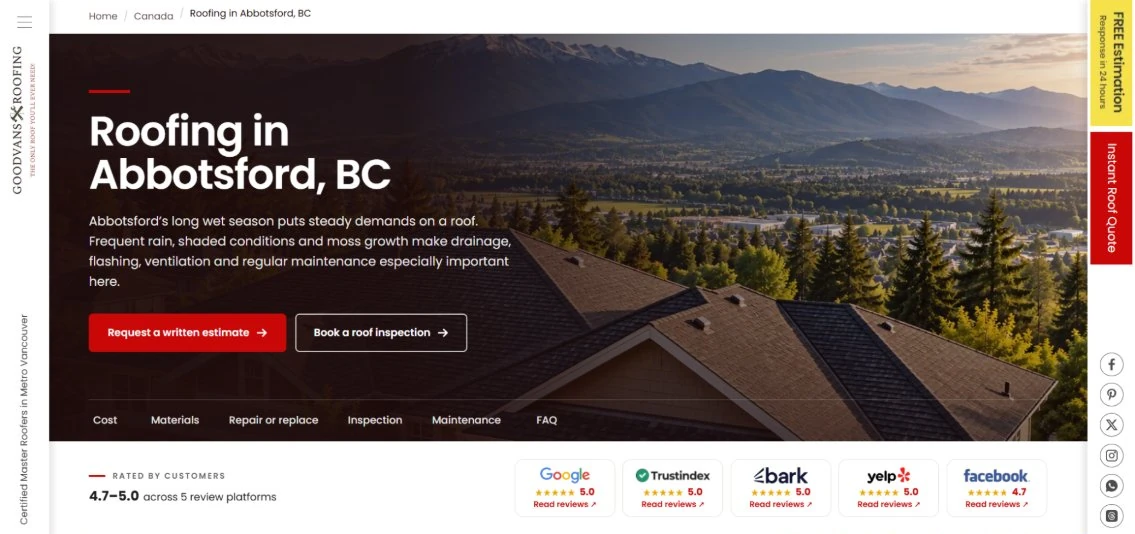
GV Roofs — we designed and implemented the Abbotsford location-page layout, including jump navigation, structured roofing content, materials comparison, maintenance information and FAQs, with image formats defined for each content slot.
Sun Infonet
Sun Infonet — a professional-audio distributor in West Patel Nagar whose business splits into systems integration, retail and e-commerce. The site had to serve all three audiences without confusing any of them, which made its structure the central design problem.
Process
How a website design project runs
01Discover
- 01Briefwhat the site is for: enquiries, sales support, credibility, recruitment.
- 02Audience and goalswho visits and what each needs.
- 03Page architecturethe pages and how they connect.
02Define
- 04Content prioritieswhat each page must say first.
- 05Visual directionagreed on one or two key pages.
- 06Key pageshomepage and a service page in full.
03Systemise
- 07Componentsthe reusable parts, with their states.
- 08Remaining pagesassembled from the agreed system.
- 09Responsive statesphone and tablet layouts for each page type.
04Deliver
- 10Reviewfeedback rounds on real layouts.
- 11Handoffto our developers or yours.
- 12Design QAthe built pages checked against the design, where scoped.
Small sites move through these quickly; not every project needs every step.
Custom design or a template?
Most business websites we design start from the content and structure rather than from a purchased theme. Where a well-built WordPress or Shopify theme fits your budget and brief, we will say so and customise it, and tell you plainly which you are getting. The risk with a template is not that it exists, but that its structure is accepted without asking whether it fits your content.
Design only, or design and build
Most websites we design, we also build, so design decisions carry straight into production. If you have your own developer, we can hand over screen designs for each breakpoint, component states, interaction notes and exported assets, and review the built pages against the design if that is part of the scope.
What you receive
Depending on scope:
- 01a site map and page plan
- 02designs for key pages and page types
- 03phone and tablet layouts
- 04a defined component set
- 05visual assets
- 06notes on interactions
- 07a developer handoff
- 08design QA against the build
Clickable prototypes and a formal design system are included when the project needs them rather than by default.
Delhi · India · Global
A-117, 2nd Floor, Sewak Park,
South West Delhi-110059, India
Since 2012
Working with a team in Delhi
We are based at A-117, 2nd Floor, Sewak Park, South West Delhi-110059, India, and have been designing and building websites from Delhi since 2012. For Delhi clients that means meeting in person when it helps, which on a larger project it usually does, especially at the start. It also means we know the difference between what a Delhi manufacturer selling to procurement teams needs from a website and what a local consumer brand or a professional firm needs. We work with clients across India and internationally in the same way.
Related services
- Design overview — all design services.
- Website Development — building the design.
- UI/UX Design · Website Redesign · Ecommerce Website Design
Questions
Website Design FAQs
Design decides what each page says and in what order, how the site is structured, how it looks and how it behaves on different screens. Development builds it: the CMS or framework, the code, integrations, performance and hosting. We do both and plan them together, but the design can also be built by your own developers.
Most business websites we design start from the content and structure rather than a purchased theme. Where a good WordPress or Shopify theme fits the budget and brief, we recommend it, customise it and tell you that is what you are getting.
Yes. We can hand over screen designs for each breakpoint, component states, interaction notes and assets, and review the built pages against the design if that is included in the scope.
We design how each page type behaves on phones and tablets — navigation, section order, card layouts, images, buttons and forms — rather than leaving the small-screen version to be worked out during the build.
Yes. We plan the pages, what each must say first, and where proof and calls to action sit. Final copy can be written by you, by us or with our content team, but the structure is agreed before layouts are finalised.
Yes. If your current site has content, URLs or rankings worth keeping, a redesign is often the better route, and it starts by working out what to keep. Our website redesign service covers that.
We design clear heading structures, readable text, visible FAQs, internal links and mobile-friendly layouts, and make sure important content is not lost. Design removes obstacles; it does not guarantee rankings on its own.
Website design projects typically fall in the ₹25,000–₹60,000 range. Where a project sits in that range depends on the number of pages and distinct layouts, responsive states, how much content and structure work is needed, brand requirements, interactions, review rounds, and whether development is included. It is an indicative range, not a fixed price: we confirm the final scope, price and schedule in writing after reviewing your brief or existing website.
Planning a new website?
Send us your brief, your content or the site you want to replace. We will tell you what the new site needs, whether a template would do, and what design and build would involve. We reply the same working day.
Discuss Your Website


